







What's Happening?
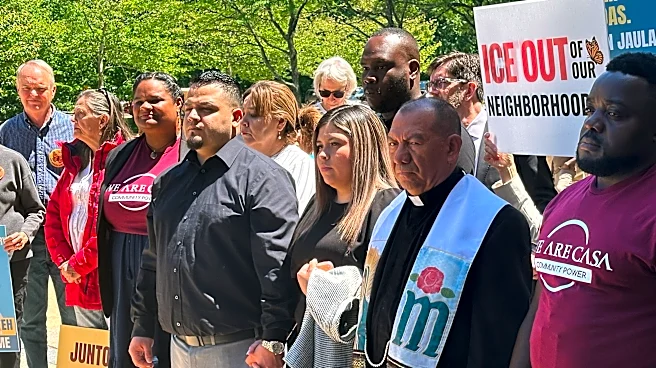
Federal agents from the U.S. Immigration and Customs Enforcement (ICE) have resumed operations in Lake County, Illinois, targeting undocumented residents. This follows a period of reduced activity after President Trump replaced several high-ranking officials
within ICE and the Department of Homeland Security. Recent reports indicate that ICE agents have been seen in unmarked SUVs in areas such as Lake Bluff, North Chicago, Round Lake Beach, and Waukegan. The operations are part of a broader effort to detain individuals residing in the U.S. without legal status. A notable case involved the arrest of a 30-year-old Honduran national in Waukegan, who had a prior criminal record and had been deported twice before. This resurgence in ICE activity has sparked concern among immigration service groups, who note that many of those detained have no criminal record.
Why It's Important?
The renewed ICE operations in Lake County highlight ongoing tensions surrounding immigration enforcement in the U.S. While the Trump administration has emphasized the removal of undocumented individuals with criminal records, data suggests that a significant portion of those detained have no such history. This has raised questions about the fairness and focus of immigration enforcement policies. The operations have significant implications for local communities, particularly those with large immigrant populations, as they may lead to increased fear and uncertainty among residents. Additionally, the actions of ICE could impact local economies, as undocumented individuals often contribute to various sectors. The situation underscores the broader national debate on immigration policy and enforcement, with potential political and social ramifications.
What's Next?
As ICE operations continue, immigration service groups are likely to intensify their efforts to monitor and respond to federal actions. These groups, which operate rapid-response units, aim to ensure that the rights of undocumented residents are protected. They emphasize the need for agents to have judicial warrants for arrests. The ongoing operations may also prompt further protests and advocacy efforts from immigrant rights organizations. Politically, the situation could influence discussions and policies at both state and federal levels, particularly as debates over immigration reform persist. The actions of ICE and the response from communities and advocacy groups will likely continue to shape the discourse on immigration in the U.S.
Beyond the Headlines
The resurgence of ICE operations in Lake County may have deeper implications for the relationship between federal agencies and local communities. The presence of federal agents conducting sweeps can strain trust between law enforcement and residents, potentially leading to decreased cooperation in other areas of public safety. Moreover, the focus on undocumented individuals without criminal records raises ethical questions about the prioritization of enforcement resources. The situation also highlights the challenges faced by local governments in balancing federal mandates with the needs and concerns of their constituents. As immigration remains a contentious issue, the actions in Lake County could serve as a microcosm of broader national trends and tensions.