







What's Happening?
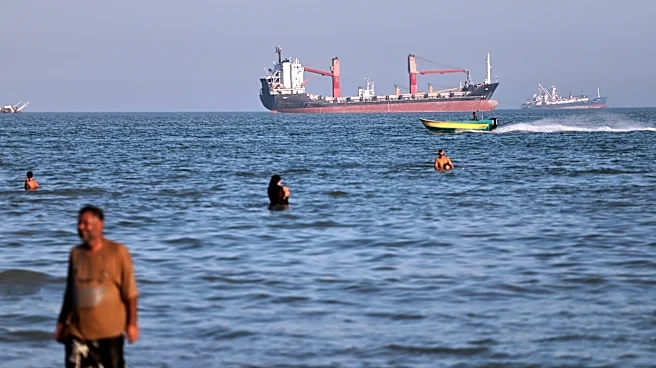
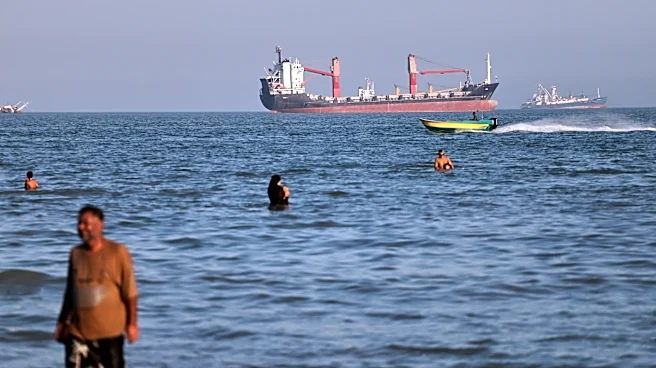
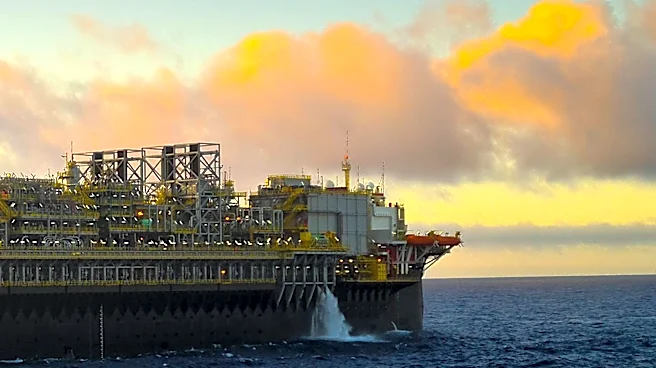
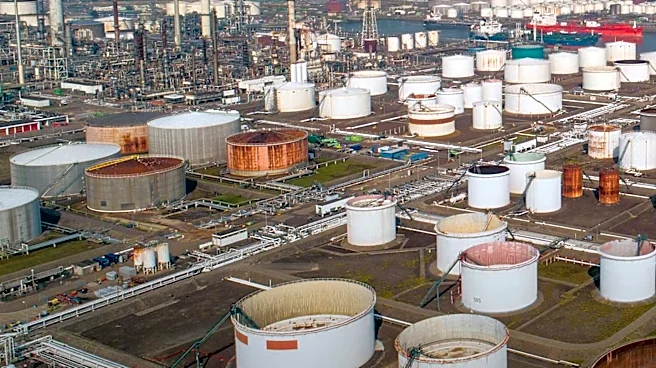
Saudi Aramco has resumed crude oil loadings at its Ras Tanura terminal in the Gulf after a nearly four-month halt. This move comes as the world's largest oil exporter seeks to normalize operations amid a global rush to move oil cargoes. The resumption
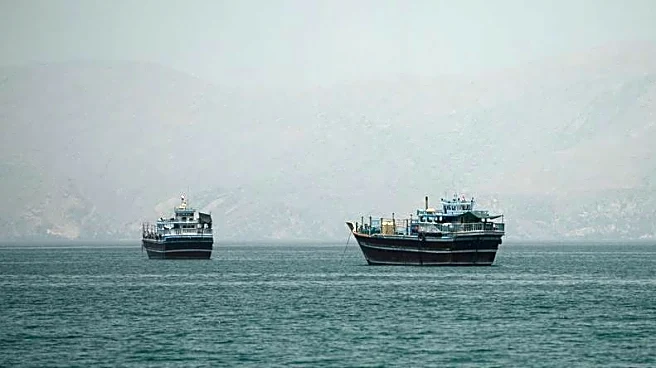
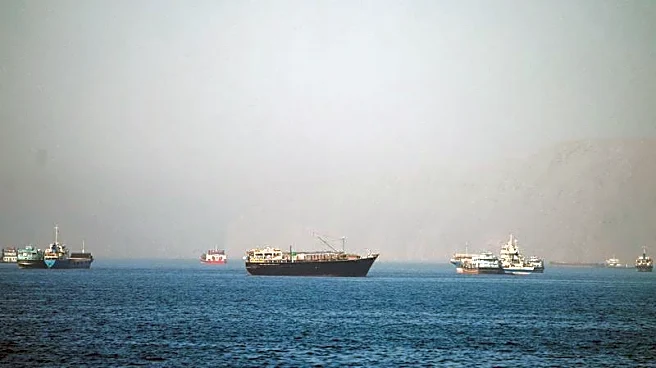
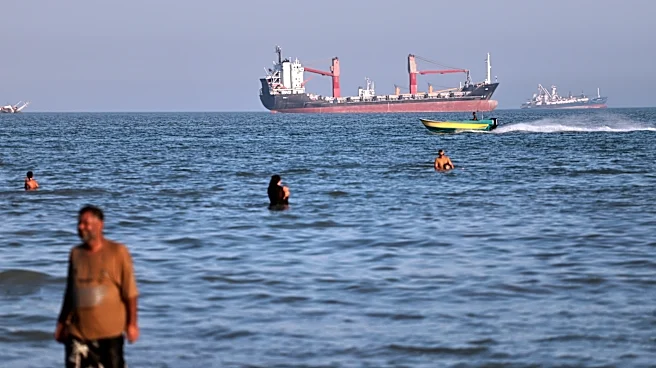
follows an interim deal between the United States and Iran to halt hostilities and reopen the Strait of Hormuz, a critical passage for global oil and liquefied natural gas supplies. Two Very Large Crude Carriers (VLCCs) were seen loading at Ras Tanura, with another VLCC heading towards the terminal. Despite the resumption, concerns remain as a Taiwanese cargo ship was recently attacked in the Strait of Hormuz, raising questions about the stability of the interim peace deal.
Why It's Important?
The resumption of oil loadings at Ras Tanura is significant for global oil markets, as it signals a potential stabilization in the region's oil supply chain. The Strait of Hormuz is a vital chokepoint for the world's oil supply, and any disruption can have far-reaching impacts on global oil prices and energy security. The move by Saudi Aramco to resume operations could help alleviate some of the supply constraints experienced during the conflict, potentially stabilizing oil prices. However, the recent attack on a cargo ship underscores the fragility of the current peace and the ongoing risks to shipping in the region.
What's Next?
The situation in the Gulf remains tense, with the potential for further disruptions if the interim peace deal between the U.S. and Iran falters. Stakeholders in the oil industry will be closely monitoring the security situation in the Strait of Hormuz and the broader geopolitical dynamics in the region. Any escalation could lead to renewed disruptions in oil supply, impacting global markets. Additionally, the response from international naval forces, such as the British navy's decision to pause escort operations, will be critical in ensuring the safe passage of oil tankers through the strait.