
What's Happening?
Cuba's main airport in Havana has declared a shortage of Jet A-1 fuel, impacting flight operations. The airport issued a NOTAM indicating that the fuel will be unavailable from February 10 to March 11.
This shortage has led Air Canada to suspend its services to Cuba, affecting flights from Toronto and Montreal. The airline plans to operate empty flights to repatriate approximately 3,000 passengers, using alternative fuel strategies. Cuban President Miguel Diaz-Canel has expressed confidence in overcoming the crisis, attributing the fuel shortage to a U.S. energy blockade.
Why It's Important?
The fuel shortage at Havana's airport highlights the broader energy crisis affecting Cuba, which could have significant implications for the country's tourism and aviation sectors. The suspension of flights by major carriers like Air Canada could lead to a decrease in tourist arrivals, impacting the local economy. Additionally, the situation underscores the challenges faced by Cuba due to geopolitical tensions, particularly with the United States. The crisis may prompt Cuba to seek alternative energy solutions or negotiate with international partners to alleviate the shortage.
What's Next?
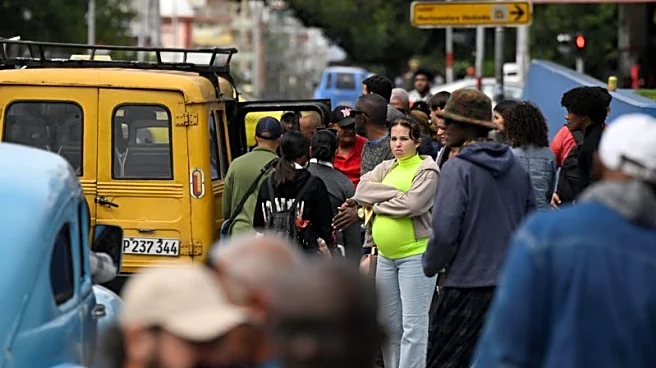
Cuban authorities are likely to continue exploring measures to address the fuel shortage, including adjustments to public transport services. The government may also seek diplomatic solutions to ease the energy blockade or secure alternative fuel supplies. Airlines affected by the shortage will need to monitor the situation closely and adjust their operations accordingly. The resolution of this crisis will be critical for maintaining Cuba's connectivity with international markets and supporting its tourism industry.