
What's Happening?
South Africa's central bank governor, Lesetja Kganyago, announced that the country's interest-rate-cutting cycle is expected to continue, with projections for two more 25-basis-point rate cuts this year
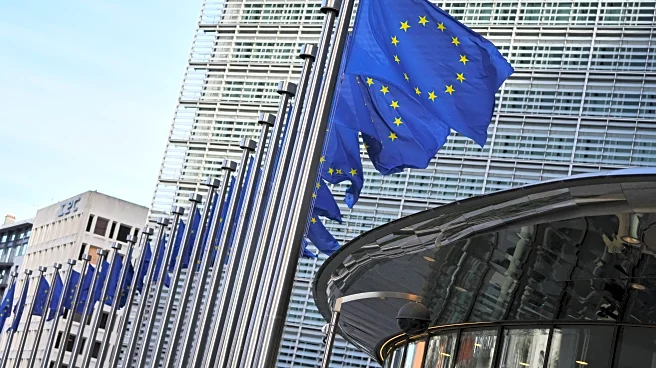
and another next year. This decision comes as inflation in South Africa shows signs of slowing. The central bank's current interest rate stands at 6.75%, which Kganyago noted is still distant from the terminal rate. The bank's strategy is to wait for further inflation reduction before making additional moves. Additionally, South Africa is keen to utilize new European Central Bank (ECB) repo lines, which would allow borrowing euros against collateral, a move seen as beneficial due to significant trade and investment ties with Europe.
Why It's Important?
The continuation of rate cuts by South Africa's central bank is significant as it reflects the country's efforts to stimulate economic growth amid slowing inflation. Lower interest rates can encourage borrowing and investment, potentially boosting economic activity. The potential use of ECB repo lines highlights South Africa's strategic positioning in international finance, aiming to strengthen its economic resilience. This development is crucial for U.S. investors and businesses with interests in South Africa, as it may impact trade dynamics and investment opportunities. Furthermore, the move aligns with global trends of central banks adjusting monetary policies to navigate economic challenges.
What's Next?
As South Africa proceeds with its interest rate adjustments, the central bank will closely monitor inflation trends and economic indicators to guide future decisions. The potential engagement with ECB repo lines could enhance South Africa's financial stability, especially in times of global economic uncertainty. Stakeholders, including international investors and trade partners, will be watching these developments closely, as they may influence market conditions and bilateral trade relations. The central bank's actions will also be pivotal in shaping South Africa's economic trajectory in the coming years.