


What's Happening?
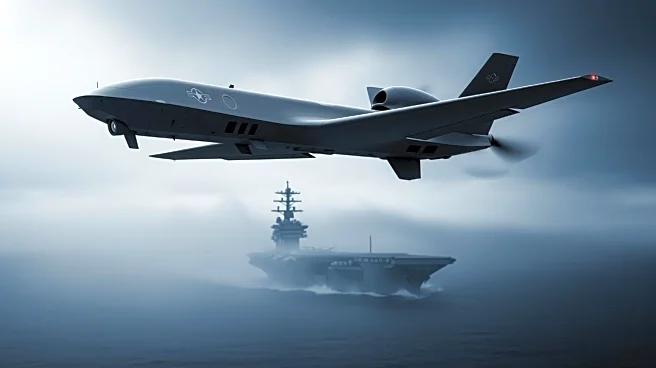
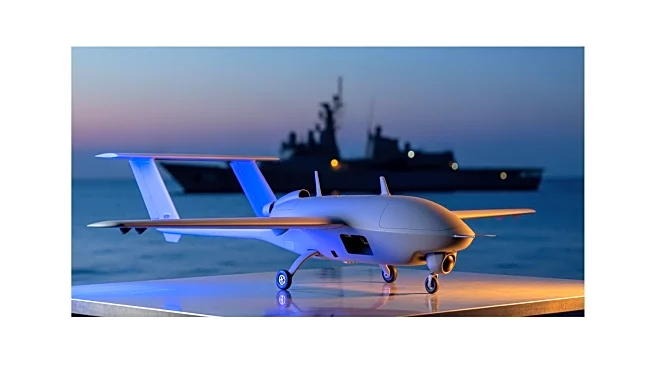
The U.S. Navy has successfully tested a new drone, named LUCAS (Low-Cost Uncrewed Combat Attack System), in the Persian Gulf. This drone is a reverse-engineered version of the Iranian Shahed kamikaze drone, designed to be launched from ships, trucks,
or catapults. The test was conducted from the USS Santa Barbara, marking a significant development in U.S. military capabilities. The LUCAS drone is priced at approximately $35,000 per unit, offering a cost-effective alternative to more expensive drones like the MQ-9 Reaper, which costs around $30 million. This development comes amid ongoing tensions with Iran, where the U.S. is seeking to counter Iran's drone capabilities by using similar technology.
Why It's Important?
The introduction of the LUCAS drone represents a strategic shift in U.S. military operations, particularly in the context of the ongoing tensions with Iran. By utilizing a low-cost, expendable drone, the U.S. can effectively counter Iran's drone strategies without incurring significant financial or operational risks. This approach allows the U.S. to saturate battle spaces with decoys and real threats, potentially overwhelming enemy defenses. The ability to launch these drones from various platforms, including ships without runways, enhances operational flexibility and reduces dependency on fixed bases, which can be politically sensitive. This development could alter the balance of power in the region, providing the U.S. with a new tool to deter Iranian aggression.
What's Next?
The U.S. military is likely to continue refining and expanding the use of the LUCAS drone, potentially increasing production and deployment across various theaters. This could involve collaboration with multiple manufacturers to ensure scalability and rapid deployment. The successful test in the Persian Gulf suggests that the U.S. may integrate these drones into broader military strategies, particularly in areas where traditional airpower is constrained. Additionally, the U.S. may face diplomatic challenges as it navigates the implications of deploying such technology in sensitive regions, balancing military objectives with geopolitical considerations.
Beyond the Headlines
The deployment of the LUCAS drone highlights a broader trend in military technology towards cost-effective, expendable systems that can be rapidly deployed and replaced. This shift reflects a changing paradigm in warfare, where attrition and saturation tactics become more viable. The ethical implications of using drones modeled after adversary designs also raise questions about the nature of modern warfare and the potential for escalation. As these technologies become more prevalent, there may be increased scrutiny on their use and the potential for unintended consequences in conflict zones.