











What's Happening?
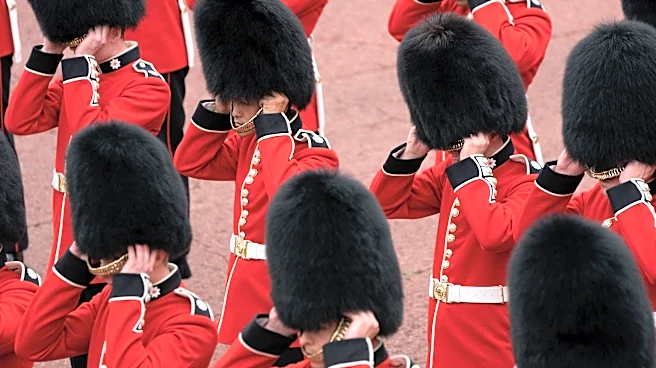
The iconic bearskin caps worn by the King's Guards have become a subject of controversy due to their use of real black bear fur. Animal rights groups, including PETA, are advocating for a switch to faux fur, citing ethical and financial concerns. The British
Ministry of Defense acknowledges the complexity of the issue, noting that any alternative fabric must meet specific requirements such as absorbency, quick drying, and aesthetic appeal. The caps, which weigh about 1.5 pounds, are sourced from legally and licensed culls in Canada, where black bears are not endangered. The Ministry is considering alternatives but has yet to find a suitable replacement that maintains the caps' historical significance and quality.
Why It's Important?
The debate over the use of real bear fur in the King's Guards' caps highlights broader ethical and environmental concerns regarding animal rights and sustainability. The push for faux fur reflects a growing trend towards cruelty-free and sustainable fashion, which could influence public policy and consumer behavior. The outcome of this debate could set a precedent for other ceremonial and traditional uses of animal products, potentially impacting industries reliant on animal fur. Additionally, the financial implications are significant, as each cap costs taxpayers over $3,000, prompting discussions on government spending and resource allocation.
What's Next?
The British Ministry of Defense is in the process of evaluating alternative materials for the caps, considering factors such as sustainability, affordability, and historical significance. Animal rights groups are likely to continue their advocacy, potentially influencing public opinion and political pressure on the government. If a suitable faux fur alternative is found, it could lead to a policy shift and set a new standard for ceremonial attire. The ongoing debate may also prompt other institutions to reassess their use of animal products, furthering the movement towards ethical and sustainable practices.
Beyond the Headlines
The controversy over the bearskin caps also touches on cultural and historical dimensions, as these caps have been a part of British military tradition for centuries. The discussion raises questions about balancing tradition with modern ethical standards. The potential shift to faux fur could symbolize a broader cultural shift towards more humane practices, reflecting changing societal values. This debate also underscores the role of public institutions in leading by example in the transition to sustainable and ethical practices.