


What's Happening?
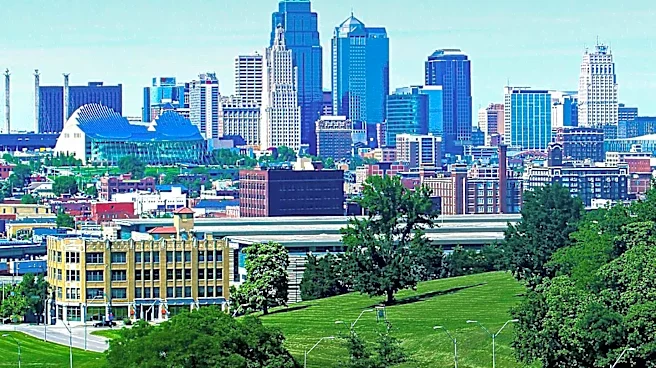
Severe storms swept through the Kansas City metro area on Sunday, leaving tens of thousands of residents without power. As of Sunday night, the Evergy outage map reported over 34,000 customers in the dark, with particularly hard-hit areas including Grandview
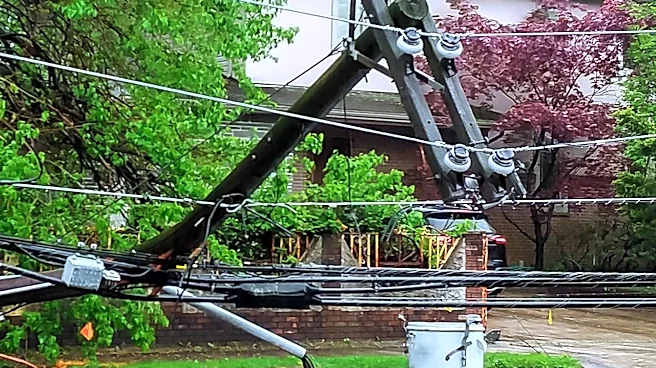
and Raymore in Missouri, and Bonner Springs and Leavenworth in Kansas. The storms brought quarter-sized hail to Bonner Springs, high winds that knocked down trees in Leavenworth, and power lines in Raymore. Additionally, the powerful winds caused structural damage in Kansas City, with part of a building's 'rain roof' being blown off at 115 NW Harlem Rd. One injury was reported in Gower, Missouri, as the storm moved through. A severe thunderstorm watch remained in effect for the entire metro area until 10 p.m.
Why It's Important?
The widespread power outages and structural damage in the Kansas City metro area underscore the significant impact severe weather events can have on urban and suburban communities. The disruption to over 34,000 customers highlights vulnerabilities in infrastructure and the immediate challenges faced by residents, including loss of essential services and potential safety hazards. For businesses, power outages can lead to operational shutdowns, financial losses, and supply chain interruptions. The reported injury and structural damage emphasize the direct threat to public safety and property. This event serves as a critical reminder for local governments, utility providers, and residents to enhance preparedness measures, improve infrastructure resilience, and ensure effective emergency response protocols to mitigate the effects of such storms.
What's Next?
Utility crews will be working to restore power to the tens of thousands of affected customers in the Kansas City metro area. This process may take time, especially in areas with significant damage to power lines and infrastructure. The Kansas City Fire Department and City Planning and Dangerous Buildings officials will assess the structural integrity of the damaged building on NW Harlem Rd. to determine its safety for occupants. Residents in affected areas will begin the process of cleaning up debris and assessing property damage. The incident will likely prompt a review of emergency response procedures and infrastructure resilience by local authorities to better prepare for future severe weather events, potentially leading to investments in grid modernization and storm-resistant construction.
Beyond the Headlines
The impact of these severe storms extends beyond immediate damage and power outages, touching upon broader issues of climate change and urban resilience. The increasing frequency and intensity of such weather events challenge existing infrastructure and emergency management systems, particularly in rapidly developing metropolitan areas. This incident could spark discussions about the long-term sustainability of current urban planning practices and the need for greater investment in climate-adaptive infrastructure. Furthermore, the disruption to daily life and potential economic losses highlight the importance of community preparedness and mutual aid networks. The psychological toll on residents experiencing repeated severe weather events also warrants attention, emphasizing the need for robust community support and mental health resources in disaster recovery efforts.