






What's Happening?
The Coachella music festival, one of the largest and most profitable in the U.S., experienced significant disruptions during its first weekend due to a powerful dust storm. The storm, characterized by strong winds, enveloped the festival grounds in desert
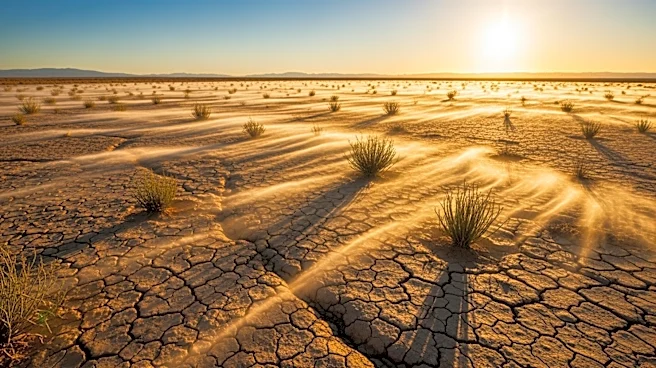
sand, leading to the cancellation of performances, including a set by Italian EDM artist Anyma. The South Coast Air District issued dust advisories, warning of unhealthy dust levels. This event highlights the increasing frequency of dust storms in the region, which pose health risks such as valley fever, a respiratory infection caused by inhaling Coccidioides fungus spores. The economic impact of dust storms is substantial, with a 2017 study estimating costs exceeding $154 billion in the U.S., affecting health, agriculture, and renewable energy sectors.
Why It's Important?
The disruption at Coachella underscores the broader environmental and economic challenges posed by dust storms, which are becoming more frequent due to climate change. These storms not only threaten public health by increasing the risk of respiratory illnesses but also have significant economic implications. The costs associated with dust storms, including health care, property damage, and agricultural losses, are comparable to those of major natural disasters. As such, they represent a growing concern for policymakers and industries reliant on outdoor events and agriculture. The situation at Coachella serves as a microcosm of the larger environmental challenges facing the Southwest U.S., highlighting the need for effective dust mitigation strategies.
What's Next?
In response to the increasing threat of dust storms, state and local governments in California are implementing dust-mitigation efforts, such as installing windbreaks and reshaping topography. These measures aim to reduce dust emissions and their associated health and economic impacts. As climate change continues to exacerbate these conditions, further innovative solutions and increased funding will be necessary to address the growing problem. The situation at Coachella may prompt festival organizers and local authorities to enhance their preparedness and response strategies to minimize future disruptions and health risks.
Beyond the Headlines
The recurring dust storms at Coachella highlight the intersection of environmental change and cultural events. As festivals like Coachella draw large crowds from diverse regions, they become focal points for examining the impacts of climate change on public health and the economy. The potential for increased valley fever cases among attendees unfamiliar with the disease underscores the need for public health education and preventive measures. Additionally, the economic ramifications of dust storms extend beyond immediate disruptions, affecting long-term planning and sustainability of outdoor events in the region.