








What's Happening?
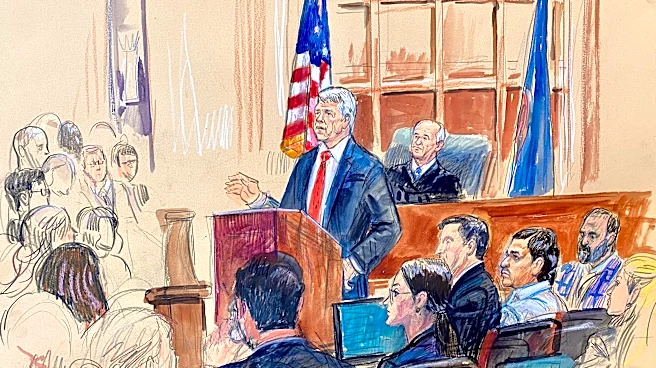
Mohammad Sharifullah, an alleged Islamic State group militant, was convicted of aiding ISIS-K in a suicide bombing at Kabul airport during the U.S. withdrawal from Afghanistan in 2021. The attack killed 160 Afghans and 13 U.S. service members. While the jury
found Sharifullah guilty of conspiracy, they could not agree on whether his actions directly resulted in the deaths, which would have increased his sentence. The trial highlighted the complexities of prosecuting terrorism cases, with defense arguments focusing on the lack of direct evidence linking Sharifullah to the bombing.
Why It's Important?
This case highlights the difficulties in securing convictions in international terrorism cases, especially when evidence is primarily based on confessions or indirect links. The bombing at Abbey Gate was a pivotal moment during the U.S. withdrawal, raising questions about the security and intelligence failures that allowed such an attack. The trial's outcome may influence future legal proceedings and counterterrorism policies, as well as U.S. military and diplomatic strategies in regions affected by terrorism.
What's Next?
Sharifullah's sentencing is pending, and the case may lead to further scrutiny of U.S. counterterrorism efforts and legal processes. The deadlock on the direct role in the attack could prompt appeals or additional investigations. The U.S. government may also reassess its approach to handling similar cases, potentially affecting international relations and security policies.