





What's Happening?
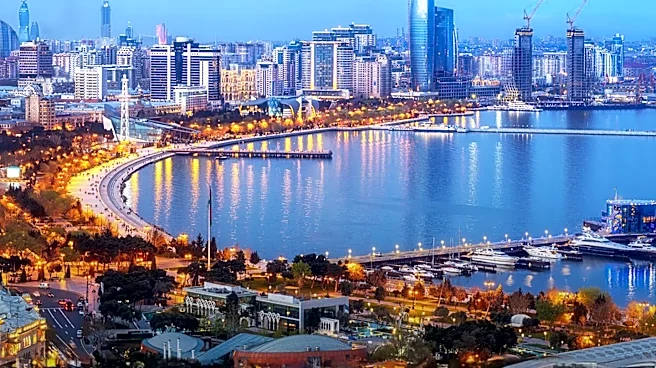
Azerbaijan has implemented six new laws as part of comprehensive reforms designed to foster a more competitive environment within its energy sector. Energy Minister Parviz Shahbazov announced this development at the Third National Competition Forum in Baku.
These legislative changes are a continuation of extensive reforms in the energy sector, which have included both legislative and institutional adjustments. The new laws, including the 'On Energy,' 'On Electric Power Industry,' 'On Gas Supply,' and 'On Heat Supply,' aim to establish market relations, promote free competition, and ensure the separation of activities as core principles of state policy. This framework is intended to create more favorable conditions for investment and competition across various energy sub-sectors. The reforms specifically target the separation of electricity generation, transmission, distribution, and supply activities, alongside regulating market relations and increasing private sector involvement. The government also seeks to balance the strengthening of conventional energy potential with the integration of renewable energy sources, encouraging private sector participation in both areas.
Why It's Important?
These legislative reforms in Azerbaijan's energy sector are significant for several reasons. By promoting market relations and free competition, Azerbaijan aims to attract greater foreign investment, which could lead to technological advancements and increased efficiency in energy production and distribution. The emphasis on separating different aspects of the electricity and gas industries (generation, transmission, distribution, supply) is a common strategy to prevent monopolies and encourage competitive pricing, ultimately benefiting consumers. For the U.S. and its allies, a more robust and diversified energy market in Azerbaijan could contribute to regional energy security, especially given Azerbaijan's role in the Southern Gas Corridor. Increased private sector participation, including in renewable energy, aligns with global efforts towards sustainable energy and could open doors for international energy companies. While the immediate impact on U.S. industries is indirect, a more stable and competitive energy market in a key energy-producing region can have broader geopolitical and economic implications, potentially influencing global energy prices and supply chains.
What's Next?
Following the adoption of these six new laws, Azerbaijan is expected to continue its efforts to implement and enforce the new regulatory framework. The Energy Minister indicated that the separation of electricity generation, transmission, distribution, and supply activities, along with the regulation of market relations and the expansion of private sector participation, are key priorities. This suggests that further policy adjustments and regulatory oversight will be necessary to ensure the effective functioning of the newly competitive energy market. The government will also focus on integrating renewable energy sources into the national energy system and creating new generation capacities, with continued emphasis on private sector involvement. Additionally, the state will maintain its role in regulating natural monopolies in electricity and natural gas transmission and distribution to ensure supply continuity and system security, while also prioritizing transparency, efficiency, and consumer protection. Future competitive renewable energy auctions are planned from 2028, indicating a long-term commitment to these reforms.
Beyond the Headlines
The adoption of these new laws in Azerbaijan's energy sector extends beyond immediate economic benefits, touching upon deeper implications for governance, international relations, and environmental sustainability. The move towards greater competition and private sector involvement reflects a broader global trend of market liberalization, which can enhance economic resilience and reduce reliance on state-controlled enterprises. Ethically, these reforms aim to ensure fair practices and consumer protection, particularly in areas where natural monopolies exist. From a geopolitical perspective, a more robust and diversified energy sector in Azerbaijan could strengthen its position as a reliable energy partner, potentially influencing regional power dynamics and energy security discussions. The active integration of renewable energy sources, alongside conventional energy, signals a commitment to sustainable development and could position Azerbaijan as a leader in the transition to cleaner energy in its region. This dual approach addresses both immediate energy demands and long-term environmental goals, showcasing a strategic vision for the nation's energy future.