





What's Happening?
The Metropolitan Detention Center (MDC) in Los Angeles, a federal prison located in the city's Civic Center, is designed to blend into its surroundings, resembling a downtown office building. Despite its inconspicuous appearance, the facility is a significant
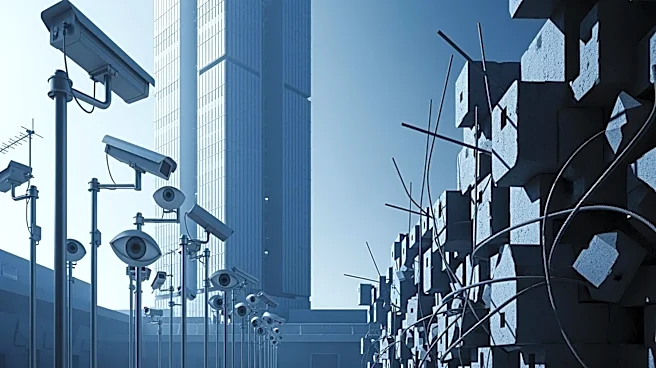
site of state control and surveillance, typically housing around one thousand inmates awaiting trial or deportation. The MDC's architecture and location are intentionally designed to obscure its carceral nature, with its butterfly-shaped design and concrete exterior allowing it to recede into the cluster of governmental properties in the area. The facility is situated near key Los Angeles neighborhoods known for anti-gentrification efforts and community resistance, such as Boyle Heights and Skid Row. The area around MDC is characterized by a controlled public space, influenced by punitive surveillance logics. The facility has become a focal point for protests against ICE raids and the broader surveillance state, with groups like the National Day Laborer Organizing Network (NDLON) organizing regular demonstrations to support detainees.
Why It's Important?
The MDC's presence in Los Angeles highlights the intersection of urban planning, surveillance, and community resistance. Its location in the Civic Center, surrounded by neighborhoods with active anti-gentrification movements, underscores the tensions between state control and community activism. The facility's design and operation reflect broader trends in urban environments where public spaces are increasingly controlled and surveilled. The protests and community actions around MDC demonstrate the resilience and organization of local communities in the face of aggressive immigration enforcement and surveillance. These dynamics are significant as they reveal the ongoing struggles over public space, state power, and community autonomy in urban settings. The MDC serves as a symbol of the broader carceral state and its impact on marginalized communities, highlighting the need for continued advocacy and resistance against oppressive systems.
What's Next?
Community groups and activists are likely to continue organizing around the MDC, using it as a site for protest and resistance against ICE and broader state surveillance. The ongoing demonstrations and community actions may influence public policy and discourse around immigration enforcement and urban surveillance. As these movements gain momentum, they could lead to increased scrutiny of the MDC and similar facilities, potentially prompting policy changes or reforms. The continued presence of community resistance may also inspire similar actions in other cities facing comparable issues, contributing to a broader national conversation about the role of surveillance and state control in urban environments.
Beyond the Headlines
The situation at the MDC reflects deeper issues related to the prison industrial complex and its integration into urban landscapes. The facility's design and operation are emblematic of how carceral systems are embedded within cities, often hidden in plain sight. This raises ethical and cultural questions about the normalization of surveillance and incarceration in everyday life. The resistance efforts around the MDC also highlight the power of community organizing and the potential for grassroots movements to challenge and disrupt state power. These dynamics suggest a need for ongoing dialogue and action to address the systemic issues underlying the carceral state and its impact on urban communities.