



What's Happening?
A group of experts has criticized the state-owned mining company Codelco for its restoration efforts on the Talabre Geoglyphs in northern Chile. The geoglyphs, located in the Antofagasta Region near Calama, are ancient figures believed to have been created
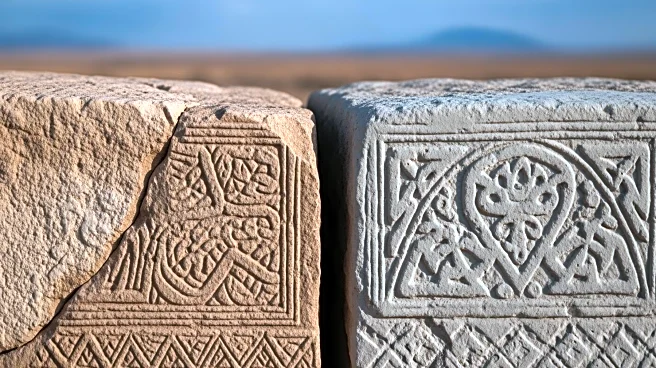
during the Formative Period, between 3,000 and 1,600 years ago. The restoration, conducted in 2019, has been described as a 'false modern makeover' by the Atacama Desert Foundation, which has been researching and managing the geoglyphs for over a decade. The restoration altered the original features of the geoglyphs, including changes to the central human figure and other anthropomorphic images. The experts argue that the restoration was poorly executed, despite Codelco's access to advanced technologies.
Why It's Important?
The criticism of Codelco's restoration efforts highlights the ongoing tension between cultural heritage preservation and industrial activities. The Talabre Geoglyphs are significant cultural artifacts that provide insight into the Andean past. The restoration's failure to maintain the geoglyphs' original form raises concerns about the impact of industrial activities on cultural sites. This situation underscores the need for careful management and protection of cultural heritage in areas affected by industrial operations. The controversy also reflects broader issues of accountability and responsibility in the preservation of historical sites, particularly when large corporations are involved.
What's Next?
The future of the Talabre Geoglyphs remains uncertain as experts call for a review of the restoration process. There may be increased pressure on Codelco and other industrial entities to adopt more responsible practices in managing cultural heritage sites. This could lead to the development of stricter regulations and guidelines for restoration projects, ensuring that cultural artifacts are preserved in their original form. Additionally, there may be calls for greater involvement of cultural and historical experts in restoration efforts to prevent similar issues in the future.
Beyond the Headlines
The situation with the Talabre Geoglyphs raises ethical questions about the role of corporations in cultural preservation. It highlights the potential for conflicts of interest when companies with economic motives are tasked with managing cultural heritage. This case may prompt a reevaluation of how cultural sites are protected and who is responsible for their preservation. It also emphasizes the importance of public awareness and advocacy in safeguarding cultural heritage from industrial encroachment.