



What's Happening?
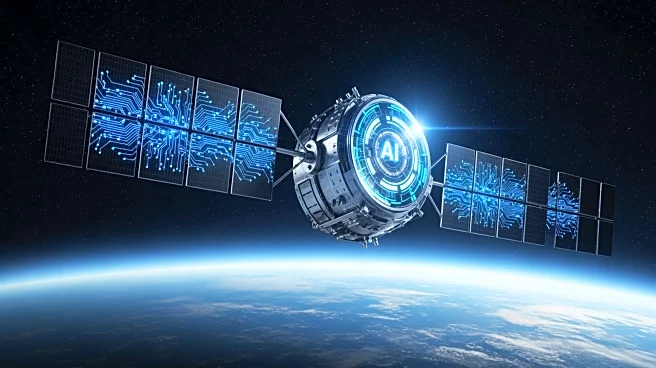
Chinese and American labs are in a race to deploy supercomputers that power AI systems from space. Companies like Starlink, Blue Origin, Google, and startup Starcloud are upgrading their satellite and chip technologies to withstand space conditions. The
move to space-based AI infrastructure is expected to save significant amounts of water and energy. China is currently leading with its space supercomputers, while U.S. companies are investing heavily in similar initiatives. Starcloud has already launched a satellite with an Nvidia GPU, marking a significant milestone in space-based AI development.
Why It's Important?
The competition to develop space-based AI supercomputers represents a significant shift in how AI infrastructure is managed. By moving AI operations to space, companies can reduce the environmental impact associated with traditional data centers, such as high energy and water consumption. This development could lead to more sustainable AI technologies and influence future investments in space-based infrastructure. The race also highlights the strategic importance of AI in global technological leadership, with both China and the U.S. vying for dominance in this emerging field.
What's Next?
As the race to deploy space-based AI supercomputers continues, both Chinese and American companies are likely to accelerate their efforts to achieve operational capabilities. The success of these initiatives could pave the way for more widespread adoption of space-based AI infrastructure. Stakeholders will be monitoring technological advancements, regulatory developments, and potential collaborations that could shape the future of AI in space. The outcome of this competition could have far-reaching implications for global technology leadership and the development of sustainable AI solutions.