






What's Happening?
International organizations, including UNESCO’s International Bioethics Committee and the UN Scientific Advisory Board, are advocating for a global moratorium on the creation of 'mirror cells' and self-replicating 'mirror organisms.' This follows warnings
issued by scientists in late 2024 regarding the potential risks of such synthetic life forms. The Paris Conference on Risks from Mirror Life has also urged researchers and funders to refrain from pursuing these organisms. The UK Government Office for Science emphasizes distinguishing between useful mirror components and self-replicating organisms to avoid hindering beneficial research. The Mirror Biology Dialogues Fund is actively facilitating international discussions among scientists, policy experts, ethicists, and funders to assess the technical pathways and governance responses for mirror life. The debate has shifted to regulating precursor technologies that could facilitate the creation of self-replicating mirror organisms, such as mirror ribosomes and genome-scale mirror nucleic acid synthesis.
Why It's Important?
The push for a global moratorium highlights significant ethical and safety concerns surrounding advanced synthetic biology. The creation of self-replicating mirror organisms, while currently technically challenging, could pose unforeseen ecological and biological risks if released or misused. The institutionalization of these warnings by major international bodies underscores a proactive approach to biosecurity, aiming to establish guardrails before the technology becomes widely feasible. This preemptive governance could set a precedent for how emerging and potentially disruptive biotechnologies are managed globally, influencing research funding, regulatory frameworks, and international cooperation in the scientific community. The distinction between useful mirror molecules and self-replicating organisms is crucial for fostering innovation while mitigating high-consequence risks, impacting the future direction of synthetic biology research and its applications.
What's Next?
The ongoing discussions facilitated by organizations like the Mirror Biology Dialogues Fund will likely continue to shape international policy and research guidelines. Researchers and funders are expected to face increasing pressure to adhere to ethical considerations and potential moratoriums. The focus will remain on identifying and regulating precursor technologies to prevent the accidental or intentional creation of dangerous self-replicating mirror organisms. Future developments may include the establishment of more formal international treaties or regulatory bodies dedicated to overseeing synthetic biology. The scientific community will also need to address the uncertainties surrounding the ecological constraints of mirror organisms and develop effective countermeasures, detection methods, and preparedness strategies, ensuring that advancements in synthetic biology are pursued responsibly.
Beyond the Headlines
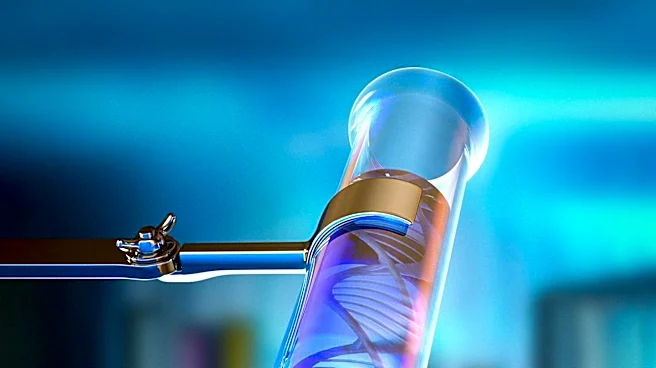
The debate over 'mirror life' touches upon fundamental questions about the definition of life, the boundaries of scientific exploration, and humanity's responsibility in creating novel biological systems. The concept of chirality, where molecules exist in 'left-handed' and 'right-handed' forms, is central to this discussion, as natural life predominantly uses one form. Creating organisms with the opposite chirality could render them incompatible with existing biological systems, potentially leading to both unique benefits (e.g., resistance to natural pathogens) and severe risks (e.g., unpredictable interactions with the environment). This scenario presents a complex ethical dilemma, balancing the potential for groundbreaking medical or industrial applications against the profound unknown consequences of introducing entirely new forms of life into the biosphere. The proactive governance efforts reflect a growing awareness of the need for anticipatory biosecurity in an era of rapid biotechnological advancement.