


What's Happening?
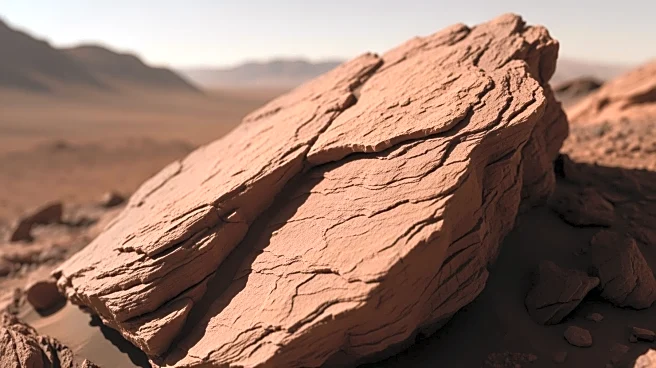
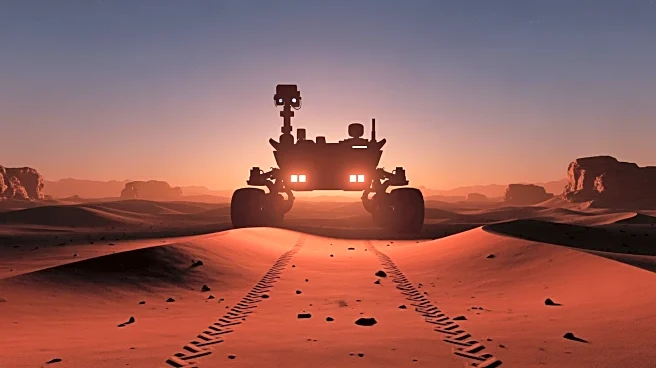
NASA's Curiosity Rover has achieved a significant milestone in its exploration of Mars, focusing on the Nevado Sajama drill site. The rover, managed by NASA's Jet Propulsion Laboratory, has completed a high-resolution 360-degree stereo mosaic of the site using a dual-camera
setup. This includes the wide-angle M34 Mastcam and the 100mm telephoto Mastcam, providing a detailed view of the Martian landscape. Additionally, Curiosity has delivered the last drilled sample from Nevado Sajama to the SAM (Sample Analysis at Mars) instrument for analysis of organic compounds. This analysis aims to detect carbon-containing materials, which could offer insights into Mars' past habitability. The rover also plans to capture nighttime images of the drill hole using its MAHLI camera's LED lights, a technique not frequently used due to previous challenges with drill hole stability.
Why It's Important?
The Curiosity Rover's findings are crucial for understanding Mars' geological history and assessing its potential to have supported life. The detailed imaging and analysis of organic compounds could provide evidence of past life or at least reveal the planet's chemical processes. This research is vital for astrobiology, as it could redefine our understanding of life's potential beyond Earth. The successful use of advanced imaging techniques and the analysis of organic materials contribute to the broader scientific goals of the Mars Science Laboratory mission, enhancing our knowledge of the Red Planet's environment and its evolution.
What's Next?
Following the completion of its current tasks at Nevado Sajama, Curiosity will continue its mission by exploring nearby areas identified by the science team for further observations. The rover's ongoing activities will focus on collecting additional data before the holiday season, ensuring that the mission continues to yield valuable scientific insights. The adaptability and continued operation of Curiosity demonstrate the potential for future discoveries as the rover navigates new challenges and opportunities on Mars.