





What's Happening?
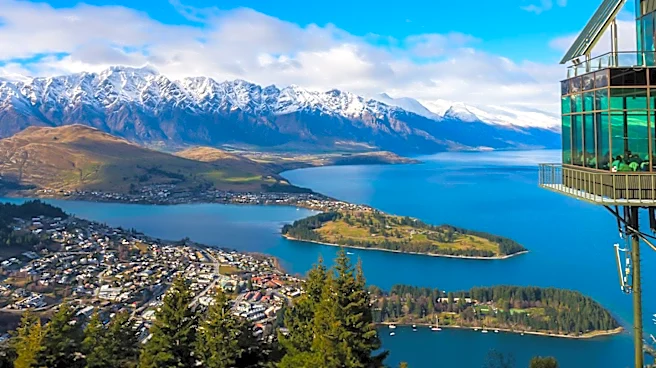
Queenstown, New Zealand, known as the Southern Hemisphere's adventure capital, is actively pursuing a transformation into a 'green adventure capital.' This initiative involves a significant shift towards sustainability across its tourism sector, encompassing
activities from boating to bungee jumping. Companies like Shotover Jet, owned by the Ngāi Tahu people, are exploring the electrification of their operations, despite substantial technical and infrastructural challenges. For instance, Shotover Jet is working on developing an electric boat prototype that can maintain the performance standards expected by customers, such as the signature 360-degree spins. This requires reducing the prototype's weight from 3.5 tons to 2.5 tons. Additionally, the charging infrastructure for an electric fleet would demand a megawatt of power, and solutions for movable charging stations are being considered due to the river's frequent flooding. Other operators, like AJ Hackett Bungy, are committed to achieving carbon neutrality by 2030 through emission reduction, renewable energy adoption, and comprehensive waste management programs, including funding predator-free traps in the Southern Lakes region.
Why It's Important?
This shift in Queenstown is significant as it represents a fundamental change in how adventure tourism perceives its relationship with the environment. For decades, the focus was on the thrill and experiences visitors could extract from the landscape. Now, the industry is grappling with more profound questions about its legacy and long-term sustainability. The Ngāi Tahu people, who own Shotover Jet, are driving this change, prioritizing ancestral mandates and viewing themselves as custodians of the Kimiākau (Shotover River). Their willingness to invest in the massive research and development costs of electrification underscores a belief that commercial aspects should not come at the expense of the environment. This movement could set a precedent for other global adventure tourism destinations, demonstrating that high-adrenaline activities can coexist with environmental responsibility. The success of Queenstown's green initiative could influence consumer demand for sustainable travel options and encourage broader industry adoption of eco-friendly practices, potentially impacting the global tourism market and environmental conservation efforts.
What's Next?
Queenstown's journey to becoming a green adventure capital will involve continued efforts in technological innovation and infrastructure development. Shotover Jet plans to continue refining its electric boat prototype to meet performance requirements and address the complex infrastructure needs for charging. The company is also looking to procure an electric shuttle bus by late 2026 or early 2027. The broader tourism sector, including AJ Hackett Bungy, aims to achieve carbon neutrality by 2030, which will necessitate ongoing emission reduction strategies, increased reliance on renewable energy, and robust waste management. The Tiaki Promise, a local commitment to act as guardians for New Zealand, will continue to guide these efforts, emphasizing respect for Māori culture and giving back to local communities. The progress and challenges faced by Queenstown will likely be closely watched by other regions and businesses in the adventure tourism industry, potentially leading to the development of new sustainable technologies and practices that could be adopted worldwide.
Beyond the Headlines
The transition of Queenstown to a green adventure capital highlights a deeper ethical and cultural shift within the tourism industry, particularly concerning indigenous values. The Ngāi Tahu people's ancestral mandate to protect the Kimiākau (Shotover River) underscores the importance of integrating traditional ecological knowledge and stewardship into modern business practices. This approach challenges the conventional profit-driven model by asserting that environmental preservation is paramount, even if it entails significant financial investment and technical hurdles. The initiative also reflects a growing global awareness among consumers and businesses about the environmental impact of travel. If successful, Queenstown could become a leading example of how a region can balance economic prosperity from tourism with ecological integrity, fostering a new paradigm for sustainable development. This could lead to a re-evaluation of what constitutes 'adventure' in tourism, shifting the focus from mere thrill-seeking to experiences that are both exhilarating and environmentally conscious, thereby influencing cultural perceptions of responsible travel.