
What's Happening?
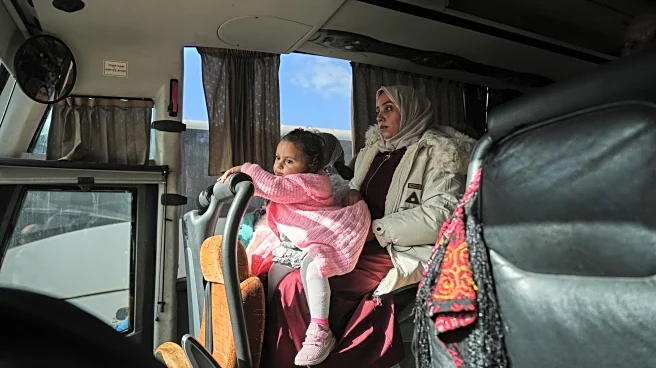
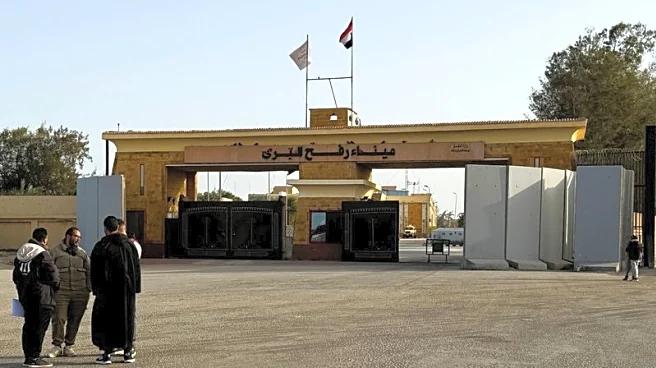
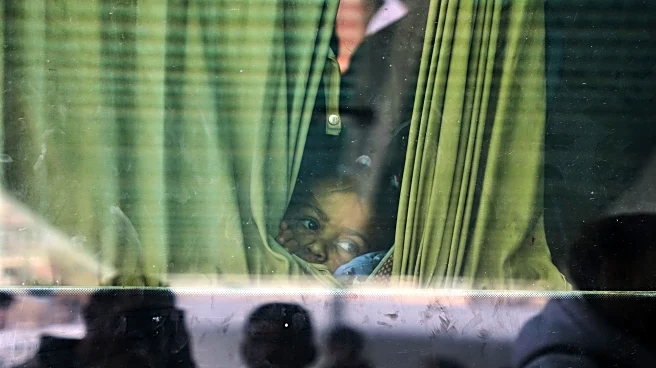
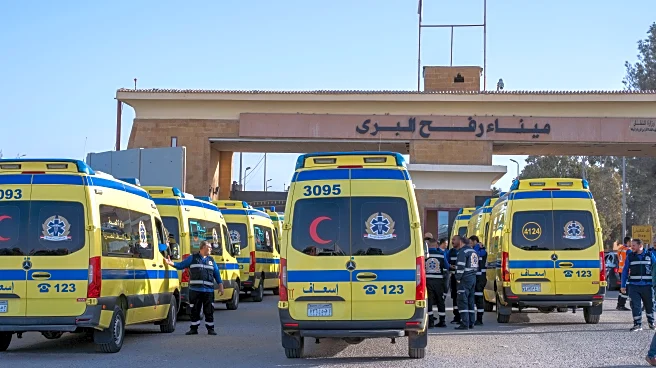
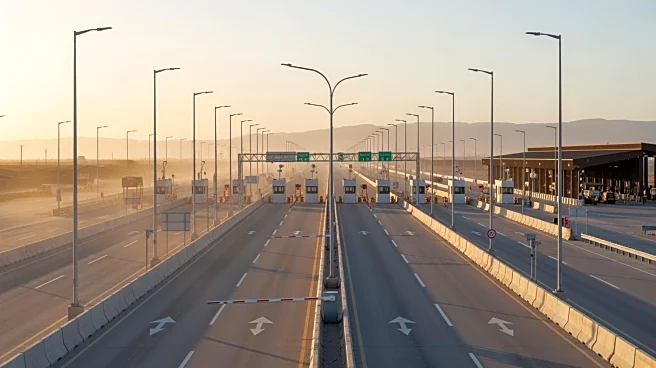
The Rafah crossing between Gaza and Egypt has reopened, allowing Palestinians to cross after being closed for an extended period due to the Israel-Hamas conflict. The reopening, however, has been marred
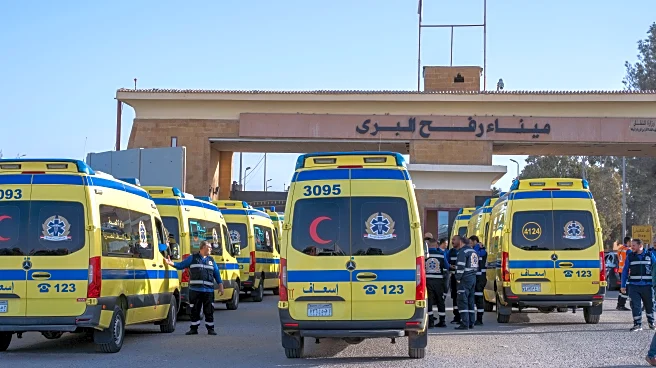
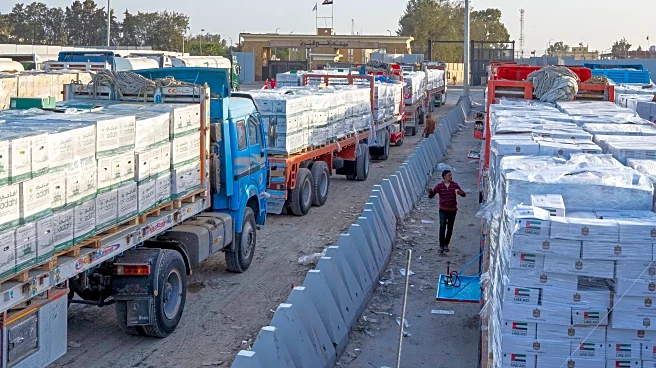
by delays and uncertainty, with only a limited number of people allowed to cross. On the first day, only about a dozen returnees and a small group of medical evacuees were able to pass through. The crossing is crucial for Palestinians seeking medical treatment unavailable in Gaza. Despite the reopening, the import of humanitarian aid through Rafah remains prohibited, and the number of crossings is far below the needs of the population.
Why It's Important?
The reopening of the Rafah crossing is a significant development in the ongoing conflict, as it provides a potential lifeline for Palestinians in need of medical care. However, the limited number of crossings highlights the ongoing humanitarian crisis in Gaza, where medical infrastructure has been severely damaged. The situation underscores the need for a more robust humanitarian corridor to address the needs of the population. The restrictions on aid and the slow pace of crossings prolong the suffering of those in need, emphasizing the importance of international intervention to facilitate aid and medical evacuations.
What's Next?
The future of the Rafah crossing remains uncertain, with potential for increased crossings if the system proves effective. However, security concerns and bureaucratic challenges may continue to hinder progress. The reopening is part of a broader ceasefire agreement that includes plans for governance changes in Gaza and disarmament of Hamas. The international community, including the U.N. and WHO, is likely to continue advocating for increased aid and medical evacuations. The situation remains fluid, with potential for further developments as stakeholders negotiate the terms of the ceasefire and humanitarian access.