







What's Happening?
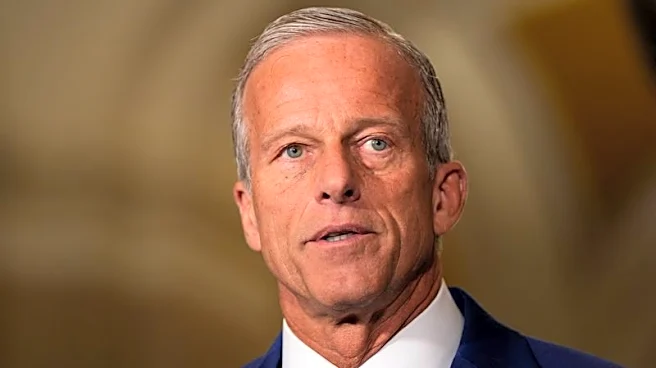
The U.S. Senate has taken a significant step towards voting on the Clarity Act, a bill aimed at establishing a legal framework for cryptocurrency regulation. Senate Majority Leader John Thune filed a motion to proceed with the bill, initiating the cloture
process required to advance contested legislation past a 60-vote threshold. This procedural move sets the stage for an initial vote on September 15, following the Senate's August recess. The Clarity Act seeks to delineate regulatory responsibilities between the Securities and Exchange Commission (SEC) and the Commodity Futures Trading Commission (CFTC), potentially placing much of the cryptocurrency industry under the CFTC's jurisdiction. The bill is seen as a potential catalyst for increased confidence and participation from traditional financial institutions in the crypto market.
Why It's Important?
The Clarity Act represents a pivotal moment for the U.S. cryptocurrency market, as it could provide much-needed regulatory certainty. By defining the roles of the SEC and CFTC, the bill aims to create a more stable environment for digital assets, which could encourage greater institutional investment. This regulatory clarity is crucial for the growth and maturation of the crypto industry, as it addresses longstanding concerns about legal ambiguities and compliance risks. If passed, the Clarity Act could lead to increased adoption of cryptocurrencies, potentially boosting market activity and innovation within the sector.
What's Next?
The Senate's procedural vote on September 15 will be a critical test for the Clarity Act. Republican leaders will need to secure bipartisan support to reach the 60-vote threshold required for passage. Negotiations are expected to continue over unresolved issues, including provisions related to illicit finance, law enforcement, and stablecoin regulations. Additionally, the bill's progress may be influenced by political dynamics, as lawmakers balance legislative priorities with upcoming midterm elections. Should the Senate approve the Clarity Act, it would return to the House for further consideration before potentially being signed into law.