


What's Happening?
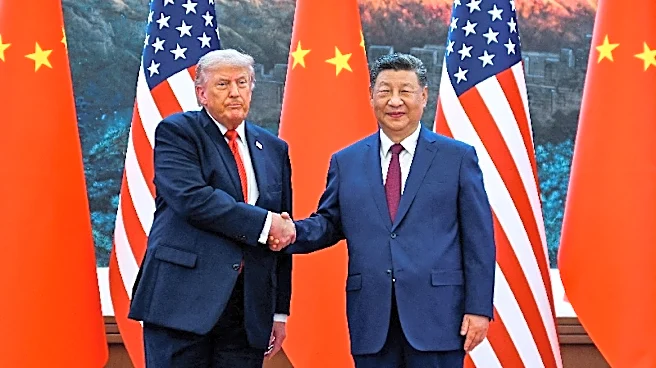
China and the United States have agreed to lower tariffs on certain products to enhance bilateral trade, following a summit between U.S. President Trump and Chinese President Xi Jinping in Beijing. The Chinese Ministry of Commerce announced that both
nations will implement measures to expand trade, particularly in agriculture, although specific details are still under negotiation. This development comes after President Trump's visit to China, marking the first by a U.S. president in nearly a decade. Despite President Trump's statement that tariffs were not discussed during his meetings with Xi, the Chinese Ministry confirmed that tariff reductions were indeed part of the discussions. The agreement also includes plans for China to purchase U.S. aircraft and address U.S. concerns regarding import licenses for beef and poultry products.
Why It's Important?
The agreement to lower tariffs and enhance trade between the U.S. and China is significant as it signals a potential easing of trade tensions between the world's two largest economies. This development could have a positive impact on U.S. agricultural exports, providing American farmers with greater access to the Chinese market. Additionally, the purchase of U.S. aircraft by China could benefit American aerospace companies, potentially leading to job creation and economic growth in the sector. The establishment of boards for trade and investment discussions may also pave the way for more structured and ongoing dialogue, reducing the likelihood of future trade disputes.
What's Next?
As negotiations continue, both countries will need to finalize the specifics of the tariff reductions and other trade measures. The establishment of trade and investment boards could lead to further agreements and cooperation in other sectors. Stakeholders, including U.S. farmers and aerospace companies, will be closely monitoring the outcomes of these negotiations. Additionally, any changes in trade policy could prompt reactions from other international trade partners, potentially influencing global trade dynamics.