



What's Happening?
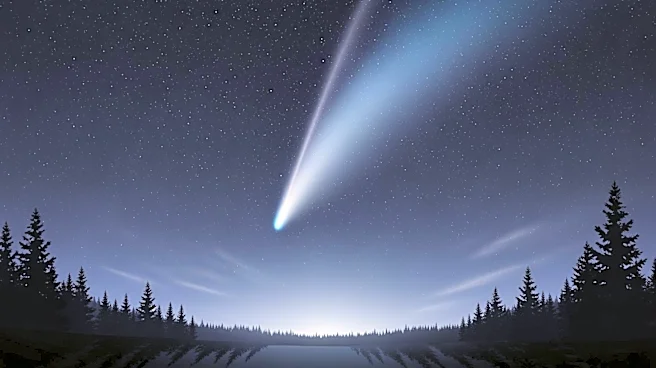
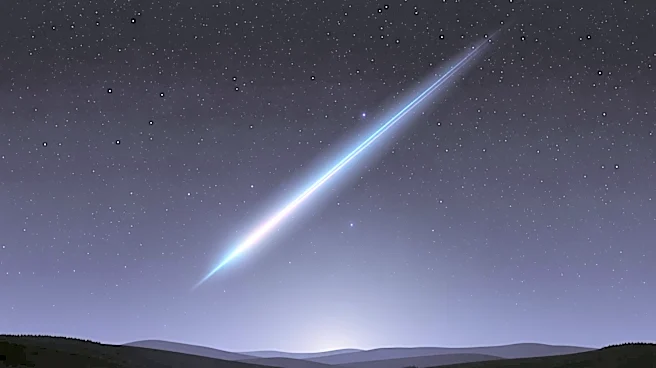
Comet C/2025 R3, discovered by the Pan-STARRS 1 telescope in Hawaii in 2025, is making a rare appearance in the Northern Hemisphere's skies. This long-period comet, which will not return for another 170,000 years, is expected to become visible to the naked
eye under ideal conditions. The best viewing period is anticipated from April 10 to April 20, as the comet approaches its closest point to the Sun. Observers are advised to look low in the East or East-Northeast sky during the early morning hours before sunrise. The comet's brightness is predicted to reach a magnitude of +2 to +3, making it a must-see event for both astronomers and casual stargazers.
Why It's Important?
The appearance of Comet C/2025 R3 presents a unique opportunity for both professional astronomers and amateur skywatchers to observe a celestial event that occurs once in a lifetime. The comet's visibility offers a chance to engage the public in astronomy and increase interest in space science. For scientists, it provides an opportunity to study the comet's composition and behavior as it interacts with the Sun's radiation. This event also highlights the importance of telescopes like Pan-STARRS in tracking and discovering celestial bodies that pass near Earth.
What's Next?
Observers in the Southern Hemisphere may have better viewing opportunities later in the month, particularly after April 27, as the comet moves away from the Sun's glare. Continued monitoring and observation will provide more data on the comet's trajectory and characteristics. The event may also inspire educational programs and public outreach efforts to promote interest in astronomy and space exploration.