
What's Happening?
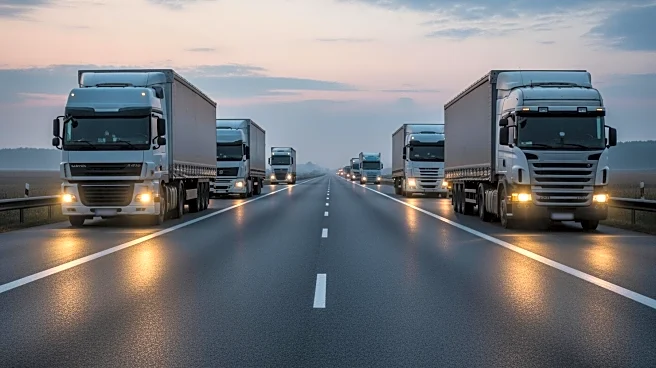
Truck drivers from Balkan countries outside the European Union have initiated a blockade at border crossings to protest the enforcement of new EU entry regulations. The protest involves drivers from Bosnia,
Serbia, North Macedonia, and Montenegro, who have formed long columns of trucks at freight border crossings and the Adriatic Sea port of Bar in Montenegro. The drivers are challenging the EU's electronic entry and exit check system, which limits non-EU citizens to 90 days within the Schengen Area every 180 days. This restriction is affecting drivers who frequently cross borders for deliveries, leading to detentions and deportations for overstaying. The drivers are demanding an exemption for professional drivers, arguing that the rules severely impact their ability to work.
Why It's Important?
The protest highlights significant challenges faced by transportation companies in the Balkan region due to stricter EU border regulations. The enforcement of these rules threatens to disrupt the logistics and transportation sectors, potentially causing economic damage to Balkan countries striving for EU membership. The situation underscores the tension between EU regulatory frameworks and the operational needs of non-EU countries, particularly those with aspirations to join the EU. The protest also raises concerns about the broader impact on regional trade and mobility, as well as the potential for prolonged economic strain if the issue remains unresolved.
What's Next?
The protest is likely to continue until a resolution is reached, with truck drivers allowing only essential cargos like medicine and live animals to pass through. Serbia's Prime Minister has already engaged with the EU representative to seek special status for regional drivers, warning of potential paralysis in transportation sectors. The ongoing negotiations may lead to policy adjustments or exemptions for professional drivers, but the outcome remains uncertain. The situation may prompt further diplomatic discussions between Balkan countries and the EU to address the regulatory challenges and mitigate economic impacts.
Beyond the Headlines
The protest reflects deeper issues related to EU integration and the balance between security measures and economic needs. The enforcement of entry rules is part of broader efforts to modernize border management and prevent illegal migration, but it also highlights the complexities of aligning EU policies with the realities of neighboring regions. The situation may influence future EU accession talks and negotiations, as Balkan countries continue to navigate the reform processes required for membership. The protest also raises ethical questions about the treatment of non-EU workers and the need for equitable solutions that support cross-border commerce.