



What's Happening?
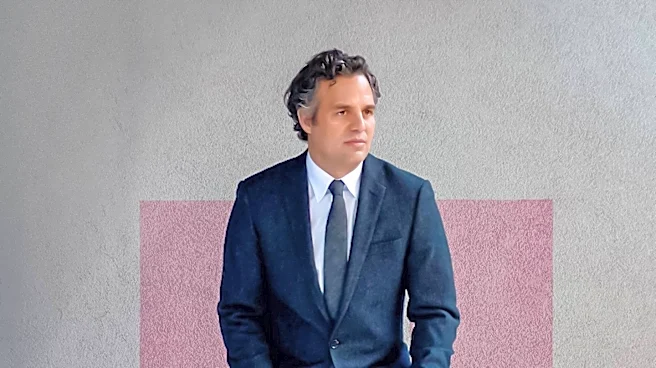
Morgan Spector, known for his role as George Russell in HBO's 'The Gilded Age,' is among over 170 Jewish figures from the entertainment industry and other fields who have signed an open letter in support of actor Mark Ruffalo. This letter comes after
Ruffalo faced accusations of antisemitism for his public statements regarding the conflict in Palestine and his criticism of a proposed merger between Paramount and Warner Bros. Discovery. Ruffalo had specifically called out Larry Ellison, founder of Oracle, and his son David Ellison, who leads Paramount, for Oracle's alleged involvement in providing technology to support the Israeli military. The open letter, published exclusively by Variety, condemns the 'smear campaign' against Ruffalo and argues against the instrumentalization of antisemitism accusations to silence criticism of actions against the Palestinian people. The signatories, including creative professionals, religious leaders, writers, and artists, assert that criticizing the actions of the Israeli Prime Minister or military technology contracts is not equivalent to criticizing the Jewish people.
Why It's Important?
This development highlights a significant cultural and political divide within the U.S. entertainment industry and broader society regarding the Israel-Palestine conflict. The public backing of Mark Ruffalo by a substantial group of Jewish figures challenges the narrative that criticism of Israeli government policies automatically constitutes antisemitism. This stance could influence public discourse and encourage more open discussion on the issue, potentially shifting how such criticisms are perceived and debated in media and political circles. For the entertainment industry, it signals a growing willingness among some prominent figures to take a stand on controversial geopolitical issues, even when it risks professional backlash. The letter's emphasis on distinguishing between criticism of a state's actions and prejudice against a religious group is crucial for fostering nuanced conversations and combating genuine antisemitism without stifling legitimate political commentary.
What's Next?
The open letter's publication is likely to intensify the ongoing debate surrounding freedom of speech, antisemitism, and the Israel-Palestine conflict within the U.S. entertainment sector. It may encourage other public figures to voice their opinions, potentially leading to further polarization or, conversely, fostering more constructive dialogue. Paramount, which initially accused Ruffalo of using 'antisemitic stereotypes,' may face pressure to respond to the collective statement from these Jewish figures. The incident could also prompt a re-evaluation of how accusations of antisemitism are levied and understood in public discourse, particularly in relation to political criticism. This situation might also influence future corporate decisions regarding mergers and acquisitions, especially if the political stances of key figures involved become a point of public contention.
Beyond the Headlines
Beyond the immediate controversy, this event touches upon deeper ethical and cultural dimensions. It underscores the complex challenge of navigating identity politics and geopolitical conflicts in an increasingly interconnected world. The letter's assertion that connecting events in Gaza with Hollywood is 'the essence of Jewish ethical duty' suggests a redefinition of Jewish identity and solidarity for some, moving beyond traditional political alignments. This could lead to a broader re-examination of how various communities within the U.S. define their political and ethical responsibilities concerning international conflicts. Furthermore, the mention of 'AI domination' and the role of technology in warfare, as highlighted in Ruffalo's initial comments and the supporting letter, brings to light the ethical implications of technological advancements and corporate involvement in military actions, prompting questions about corporate accountability and the moral responsibilities of tech giants.