




What's Happening?
A federal judge has ruled that the Environmental Protection Agency (EPA) must reverse its reclassification of two Clean Air Act waivers granted to California, which the EPA had previously designated as 'rules' instead of 'orders.' This decision follows
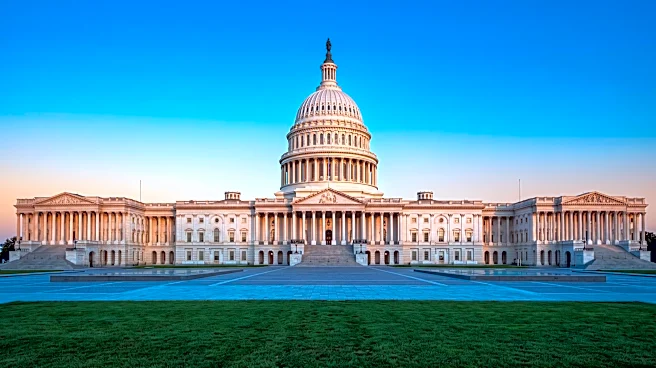
an earlier ruling where the same judge granted California a preliminary injunction regarding four other waivers. The reclassification by the EPA had made these waivers subject to potential overturn by Congress under the Congressional Review Act (CRA). Despite the judicial orders, Congress is proceeding with scheduled votes this week on resolutions to rescind these waivers. House Democrats, including Rep. Joe Neguse, have criticized these congressional actions, arguing that the waivers are not subject to the CRA and that the resolutions are unlikely to pass the Senate.
Why It's Important?
This legal and legislative battle has significant implications for environmental regulation and state autonomy. California's Clean Air Act waivers allow the state to implement stricter emissions standards than federal requirements, particularly for ships visiting its ports and commercial harbor craft. The EPA's reclassification threatened to undermine California's ability to enforce these standards, potentially impacting air quality and public health in the state. If Congress successfully rescinds the waivers, it could set a precedent that limits states' abilities to enact more stringent environmental protections. Conversely, the court's rulings reinforce the legal standing of these waivers as orders, challenging the executive branch's power to unilaterally alter their classification and potentially influencing future EPA actions regarding state environmental regulations.
What's Next?
The immediate next steps involve the EPA complying with the federal judge's order to reverse the reclassification of the waivers and correct all public statements. Concurrently, the House of Representatives is scheduled to vote on resolutions to rescind the waivers, despite the judicial rulings. The outcome of these votes will determine Congress's stance on the issue, though Rep. Neguse has indicated that such resolutions face significant hurdles in the Senate. Further legal challenges or appeals from either side are possible, potentially leading to a prolonged legal battle. The situation highlights an ongoing tension between judicial oversight, executive agency actions, and legislative authority regarding environmental policy.
Beyond the Headlines
This dispute delves into fundamental questions about federalism and the balance of power between federal agencies, the judiciary, and Congress. California's unique authority to set its own emissions standards under the Clean Air Act has historically been a cornerstone of its environmental policy, often serving as a model for other states. The attempt to reclassify these waivers as 'rules' and subject them to congressional review could be seen as an effort to centralize environmental policy-making and limit state-led innovation. The broader implications include the potential for increased legal challenges to agency actions and a more politicized environment for environmental regulations, impacting industries that operate across state lines and the overall trajectory of U.S. climate and environmental policy.