

What's Happening?
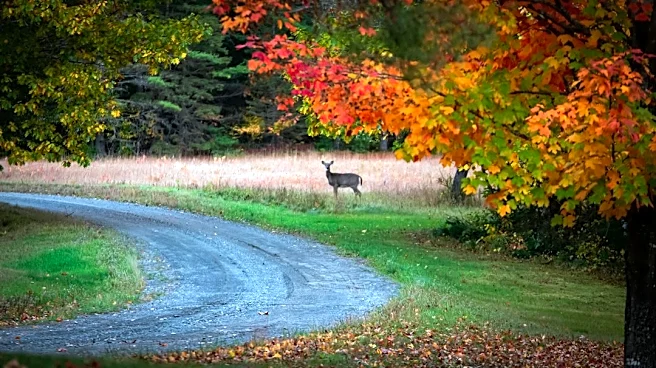
The Minnesota State Patrol has observed an increase in injury crashes involving deer, particularly at night, as the state enters the animals' mating season. Sergeant Troy Christianson noted that while there has been a rise in these incidents, most individuals
involved have been belted and sustained only minor injuries, with no reported fatalities in Southeast Minnesota so far. Drivers are urged to be highly vigilant for deer, which are described as fast, unpredictable, and difficult to see, especially after dark. The presence of farm equipment on roadways due to harvest activities is also contributing to deer being displaced and appearing in unexpected areas and times. Christianson advises drivers to be particularly cautious during early evenings and in areas where farm machinery is operating near wooded areas, suggesting reduced speeds and scanning ditches for deer.
Why It's Important?
This increase in deer-related crashes poses a significant public safety concern for Minnesota drivers. The unpredictable nature of deer, especially during mating season and when displaced by agricultural activities, elevates the risk of collisions. These incidents can lead to serious injuries, vehicle damage, and potential traffic disruptions. The Minnesota State Patrol's warning highlights the importance of defensive driving and awareness to mitigate these risks. The advice against swerving to avoid deer, instead recommending controlled braking, is crucial for preventing more severe accidents, such as collisions with oncoming traffic or rollovers. This situation underscores the need for public education campaigns on safe driving practices during periods of increased wildlife activity to protect motorists and reduce the strain on emergency services.
What's Next?
The Minnesota State Patrol will likely continue to issue warnings and public safety announcements to remind drivers about the heightened risk of deer-related crashes. Drivers are expected to exercise increased caution, particularly during dawn and dusk hours and in rural or wooded areas. Law enforcement will continue to respond to these incidents, and there may be ongoing efforts to educate the public on how to react safely if a deer appears on the roadway. The emphasis on wearing seatbelts and avoiding distracted driving will remain critical, as these practices are proven to reduce the severity of injuries in the event of a collision. As the mating season progresses and agricultural activities continue, the vigilance of drivers will be key to minimizing further incidents.
Beyond the Headlines
Beyond the immediate safety concerns, the recurring issue of deer-vehicle collisions in Minnesota during specific seasons points to broader ecological and land-use considerations. The expansion of human infrastructure into natural habitats, coupled with agricultural practices, can alter wildlife movement patterns, leading to increased human-wildlife interactions on roadways. This situation highlights the ongoing challenge of balancing human development with wildlife conservation and safety. Long-term solutions might involve studying deer migration patterns, implementing wildlife crossings in high-risk areas, or exploring strategies to manage deer populations. The economic impact of these crashes, including vehicle repairs, insurance claims, and potential medical costs, also represents a significant burden on individuals and the state, underscoring the multifaceted nature of this seemingly straightforward safety issue.