



What's Happening?
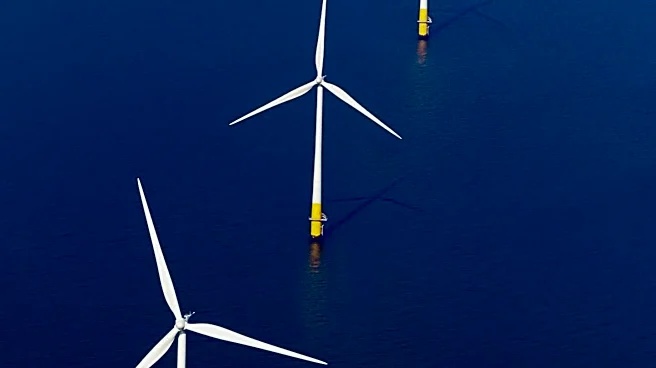
A floating wind farm off the coast of Viana do Castelo in Portugal, known as the WindFloat Atlantic project, is demonstrating significant positive impacts on local marine ecosystems. The wind farm, located over 11 miles offshore, has created a fishing
exclusion zone that has become a refuge for various marine species. Researchers have observed an increase in the abundance of fish, octopus, and invertebrates, as well as heightened dolphin activity, attributed to the improved availability of prey. The floating platforms of the wind turbines have enhanced the sea bottom substrate, creating a reef effect that attracts mussels, kelp, and barnacles. This development is part of a broader trend towards sustainable energy solutions that aim to mitigate the environmental impact of traditional energy sources.
Why It's Important?
The WindFloat Atlantic project highlights the potential for renewable energy initiatives to contribute positively to environmental conservation. By providing a sanctuary for marine life, the wind farm not only generates clean energy but also supports biodiversity. This dual benefit underscores the importance of integrating ecological considerations into energy production. The project's success could serve as a model for similar initiatives worldwide, demonstrating that renewable energy infrastructure can coexist with and even enhance natural ecosystems. This is particularly significant in the context of global efforts to combat climate change and biodiversity loss, as it offers a viable path forward for sustainable development.
What's Next?
The success of the WindFloat Atlantic project may encourage further investment in floating wind farms and similar renewable energy projects. As the global demand for clean energy continues to rise, the integration of ecological benefits into energy production could become a standard practice. Policymakers and environmental organizations may advocate for the expansion of such projects, emphasizing their role in achieving climate goals and preserving marine biodiversity. Additionally, ongoing monitoring and research will be crucial to understanding the long-term impacts of these developments on marine ecosystems and refining best practices for future projects.
Beyond the Headlines
The WindFloat Atlantic project also raises important questions about the balance between energy production and environmental stewardship. As renewable energy projects expand, it will be essential to ensure that they do not inadvertently harm the ecosystems they aim to protect. The project's success in avoiding bird collisions, despite the presence of species flying at rotor height, is a notable achievement that could inform future designs and operational strategies. Furthermore, the project's impact on local communities, including potential economic benefits from increased tourism and fishing opportunities, warrants further exploration.