





What's Happening?
A new artificial intelligence-powered chatbot has been developed to assist individuals in making informed decisions about their health symptoms. This tool, created by a team at the University of California San Diego, aims to improve the self-triage process
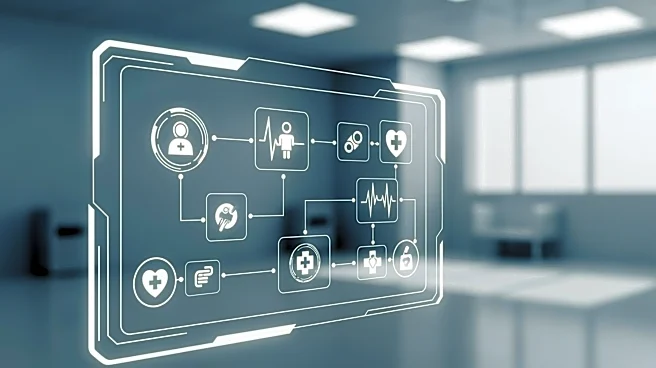
by using symptom-based flowcharts to guide users on whether to self-care, schedule a medical visit, or seek emergency care. The chatbot is designed to provide reliable medical guidance, reducing unnecessary hospital visits and ensuring timely care for those in need. It operates by engaging in conversational exchanges with users, interpreting their symptoms, and following established medical protocols to offer recommendations. The system is trained on medical flowcharts from the American Medical Association and has been tested in over 30,000 simulated conversations, achieving high accuracy in selecting appropriate medical guidance.
Why It's Important?
The introduction of this AI chatbot represents a significant advancement in healthcare technology, particularly in the realm of patient self-triage. By providing accurate and protocol-based guidance, the chatbot can alleviate the burden on healthcare systems by reducing unnecessary emergency room visits and ensuring that patients receive timely care. This tool is especially beneficial in a landscape where individuals increasingly rely on online resources for health information, which can often be overwhelming or inaccurate. The chatbot's ability to offer personalized and medically sound advice could lead to improved patient outcomes and more efficient use of healthcare resources. Additionally, the system's transparency and traceability of recommendations enhance trust in AI-driven healthcare solutions.
What's Next?
The development team plans to expand the chatbot's capabilities by integrating it into mobile applications and supporting features such as voice input, multiple languages, and image sharing. These enhancements aim to make the tool more accessible to a broader audience, including non-English speakers and older adults. Future steps also include partnering with hospitals to test the chatbot with real patients and potentially integrating it into electronic health record systems. These developments could further solidify the chatbot's role in modern healthcare, providing a scalable solution to patient self-triage and contributing to more efficient healthcare delivery.