
What's Happening?
The White House has unveiled a $1.5 trillion defense budget request for the upcoming fiscal year, which includes $65.8 billion allocated for Navy shipbuilding. This budget marks a significant increase
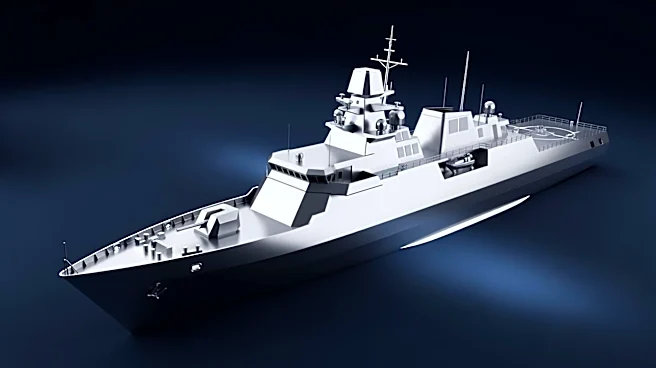
from previous years and aims to expand the U.S. naval fleet and industrial base. A key component of the budget is the establishment of the Golden Fleet, featuring the new Trump-class battleship. The budget supports the construction of 18 battle force ships and 16 non-battle force ships, doubling the number requested last year. Additionally, it includes funding for Columbia-class and Virginia-class submarines, sealift and hospital ships, tankers, submarine tenders, and shipyard upgrades. The Trump administration's plans for the Golden Fleet were initially announced last December, with the Trump-class battleship intended to deliver advanced firepower and a decisive advantage over adversaries.
Why It's Important?
The budget request underscores the Trump administration's commitment to enhancing U.S. naval capabilities amid increasing global maritime competition. By investing in shipbuilding and advanced naval technologies, the administration aims to ensure maritime domain awareness and deterrence. The funding for the Golden Fleet and Trump-class battleship reflects a strategic focus on maintaining military superiority and readiness. The budget also highlights investments in missile defense systems, artificial intelligence, and drones, which are crucial for modern warfare. These initiatives are expected to bolster the defense industrial base and provide scalable munitions production, enhancing the U.S. military's ability to respond to threats from near-peer competitors, rogue states, and non-state actors.
What's Next?
The budget proposal will likely undergo scrutiny and debate in Congress, where lawmakers will assess its alignment with national defense priorities. The procurement and construction of new naval vessels will require coordination with defense contractors and shipyards to meet production timelines. The administration's focus on advanced technologies, such as drones and artificial intelligence, may lead to further investments and partnerships with tech companies. As the budget progresses, stakeholders in the defense industry will closely monitor developments to capitalize on new opportunities for contracts and collaborations.
Beyond the Headlines
The emphasis on expanding the naval fleet and integrating advanced technologies raises questions about the long-term implications for U.S. military strategy and global power dynamics. The investment in the Trump-class battleship and Golden Fleet may signal a shift towards more aggressive maritime posturing. Additionally, the focus on artificial intelligence and drones highlights the evolving nature of warfare, where technological superiority becomes increasingly critical. Ethical considerations regarding the use of autonomous systems and the potential for escalation in international conflicts may arise as these technologies are deployed.