
What's Happening?
A woman in her 70s from Ohio has publicly shared her experience of losing $10,000 to romance scammers who impersonated actor Jason Momoa. The victim, who wishes to remain anonymous, stated that the scam began
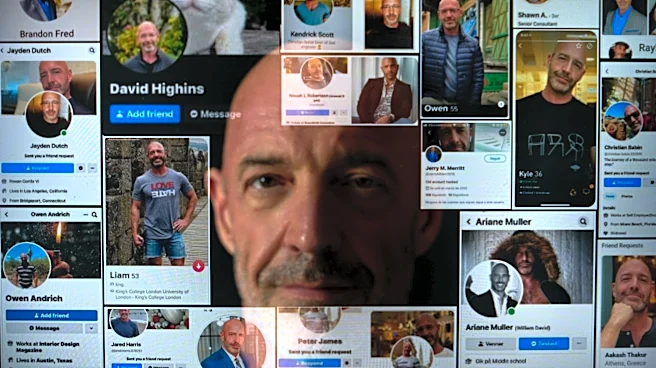
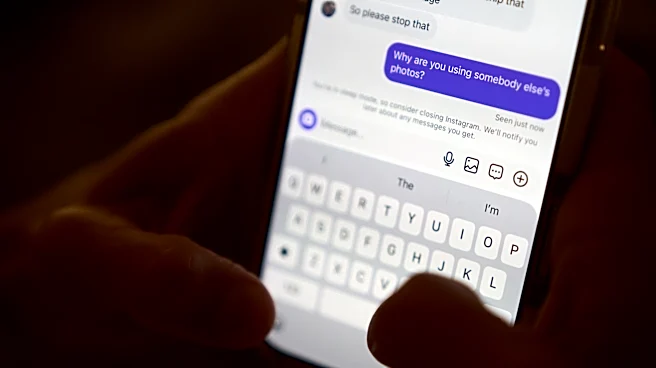
after she commented on social media posts about an actor she admired. Impostors subsequently contacted her, engaging in 'love-bombing' tactics by expressing affection and promises of marriage to gain her trust. Due to a heart condition, the woman spends significant time alone, making her vulnerable to the scammers' emotional manipulation. She believed she was communicating directly with Jason Momoa through text exchanges. The scammers eventually requested personal information and money, primarily in the form of gift cards. As a result of the scam, she has fallen two months behind on her rent. She has filed a police report and is receiving support from a case manager at the local Office on Aging. Ohio Attorney General Andy Wilson has launched a hotline (1-855-961-SCAM) to help individuals identify and report romance scams, offering resources and reviewing information for signs of fraud.
Why It's Important?
This incident highlights the growing threat of romance scams, particularly targeting vulnerable populations such as older adults. The FBI reported that Americans aged 60 and older lost $584 million to romance scams in 2025, marking a 50% increase from the previous year. The actual financial losses are likely much higher, as many scams go unreported due to shame or embarrassment. The use of celebrity impersonation, as seen with Jason Momoa in this case, adds another layer of deception, making it harder for victims to discern authenticity. The emotional toll on victims, beyond financial ruin, can be severe, as these scams exploit loneliness and the desire for companionship. The Ohio Attorney General's initiative to launch a dedicated hotline is a crucial step in providing support and resources, aiming to reduce the prevalence and impact of these fraudulent schemes on individuals and communities across the state.
What's Next?
The Ohio Attorney General's hotline (1-855-961-SCAM) will continue to serve as a primary resource for individuals who suspect they or a loved one are victims of romance scams. The office will review submitted information for signs of fraud and connect victims with appropriate support services. Increased public awareness campaigns are likely to follow, emphasizing the warning signs of romance scams, such as requests for money, gift cards, or personal information from online acquaintances, especially those claiming to be celebrities or in difficult situations. Law enforcement agencies will continue to investigate reported cases, though prosecuting international scammers remains challenging. The victim's decision to share her story anonymously is expected to encourage others who have been scammed to come forward, potentially leading to more reported cases and a better understanding of the scope of the problem. Community organizations and elder care services may also increase their efforts to educate seniors about online safety and scam prevention.
Beyond the Headlines
The case underscores a broader societal issue concerning digital literacy and the psychological manipulation employed by scammers. The 'love-bombing' tactic, where scammers overwhelm victims with affection and attention, exploits fundamental human needs for connection and validation, particularly in individuals experiencing loneliness or isolation. The impersonation of public figures like Jason Momoa leverages parasocial relationships, where individuals feel a sense of intimacy with celebrities they admire, making them more susceptible to believing they are genuinely interacting with them. This incident also highlights the ethical responsibilities of social media platforms to implement more robust verification processes and monitoring systems to prevent impersonation and the proliferation of scam accounts. The long-term implications include a potential erosion of trust in online interactions and increased skepticism towards new online relationships, particularly among older generations who may be less familiar with the nuances of digital deception.