



What's Happening?
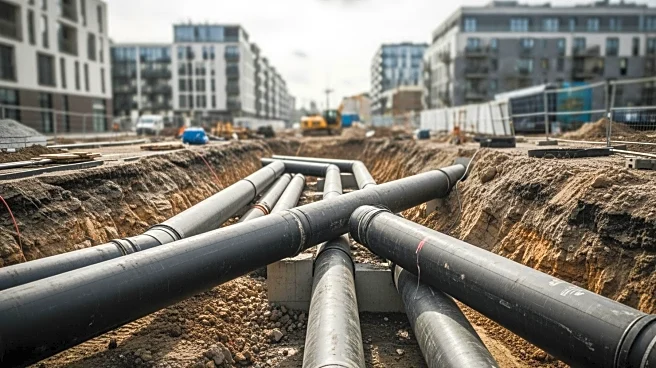
The Israeli government is addressing a critical infrastructure bottleneck that has delayed the construction of over 100,000 housing units. The shortage of wastewater treatment capacity has been identified as a major obstacle to residential construction and
urban renewal projects. A new financial and regulatory framework is proposed to accelerate the construction and expansion of wastewater treatment plants. This initiative aims to reduce housing costs, support economic growth, and improve public health by addressing environmental risks associated with inadequate sewage treatment.
Why It's Important?
The lack of adequate sewage infrastructure has significant implications for Israel's housing market and overall economic health. By removing these constraints, the government aims to increase housing supply, reduce living costs, and support long-term urban growth. The initiative is crucial for addressing the housing shortage and ensuring sustainable development. The involvement of private-sector companies in sewage utilities is expected to expedite infrastructure projects, which is vital for meeting the country's housing needs and supporting economic stability.