



What's Happening?
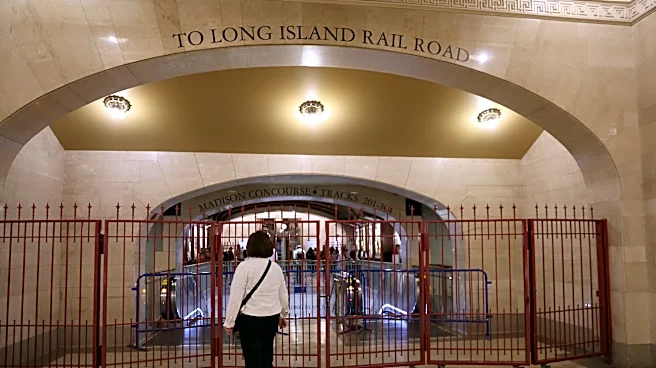
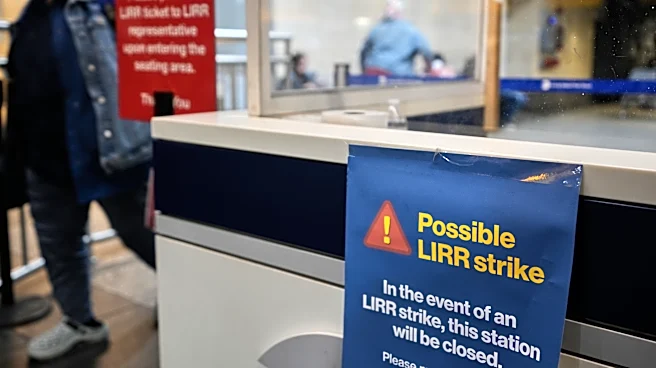
The Long Island Rail Road (LIRR) workers are on strike, causing significant disruptions for commuters in New York City and Long Island. The strike, which began after negotiations between the Metropolitan Transportation Authority (MTA) and the unions broke
down, has left the busiest commuter rail system in North America at a standstill. The MTA has activated a contingency plan, including shuttle buses for essential workers, but the strike is expected to severely impact Monday's commute. The unions are demanding better wages and healthcare benefits, while the MTA argues that the demands would strain their budget.
Why It's Important?
The LIRR strike highlights ongoing labor disputes and the challenges of balancing fair compensation with budget constraints. The strike affects approximately 250,000 daily commuters, potentially leading to economic losses and increased traffic congestion as people seek alternative transportation. The situation underscores the importance of effective negotiation and labor relations in maintaining essential public services. The outcome of this strike could set a precedent for future labor negotiations within the transportation sector.
What's Next?
The National Mediation Board has summoned both parties to resume negotiations, but no formal talks are scheduled. The MTA and unions remain at an impasse, with both sides expressing willingness to negotiate but standing firm on their positions. Commuters are advised to work from home if possible, and the MTA plans to issue pro-rated refunds to monthly ticket holders. The strike's duration and resolution will depend on the ability of both parties to reach a compromise.