
What's Happening?
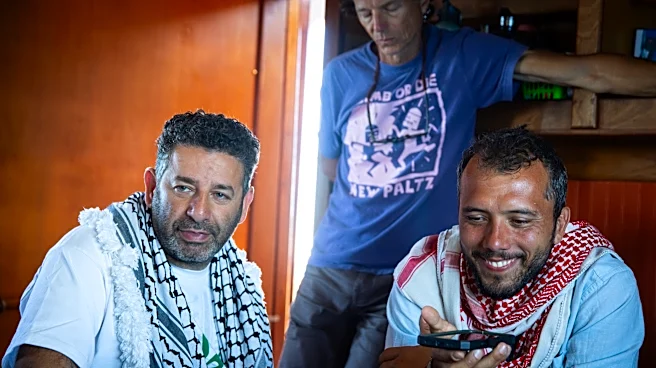
Two activists from a humanitarian aid flotilla bound for Gaza have appeared in an Israeli court after being detained by Israeli authorities. Saif Abu Keshek from Spain and Thiago Avila from Brazil were
part of the Global Sumud Flotilla, which was intercepted by Israeli forces in international waters near Greece. The activists were taken to Israel for questioning, and their detention has been extended by two days for further interrogation. They face accusations of affiliation with a terrorist organization and contact with foreign agents, although no formal charges have been filed. The rights group Adalah, representing the activists, argues that the proceedings are illegal and retaliatory, as the actions occurred in international waters. Spain has condemned the detention as a kidnapping and rejected the accusations against Abu Keshek.
Why It's Important?
The detention of the activists highlights ongoing tensions surrounding the blockade of Gaza and the international efforts to challenge it. The flotilla's mission aimed to provide humanitarian aid and draw attention to the blockade, which has been a point of contention in international relations. The involvement of international activists and the subsequent legal proceedings in Israel underscore the complex geopolitical dynamics at play. The situation also raises questions about the legality of detaining foreign nationals in international waters and the treatment of detainees, as reports of severe physical abuse have emerged. This incident could impact diplomatic relations, particularly between Israel and countries like Spain, which has condemned the actions.
What's Next?
The court's decision to extend the detention suggests that further legal proceedings are likely. The activists' legal representatives are expected to continue challenging the legality of the detention and the accusations. International attention may increase, especially if more details about the activists' treatment emerge. Diplomatic responses from other countries involved, such as Brazil, could also influence the situation. The broader implications for humanitarian missions to Gaza and the international community's stance on the blockade may be further debated in light of this incident.
Beyond the Headlines
The case raises broader ethical and legal questions about the rights of activists and the use of international waters for humanitarian missions. It also highlights the challenges faced by organizations attempting to provide aid in politically sensitive regions. The treatment of the activists, if proven to be abusive, could lead to calls for greater accountability and oversight of military and law enforcement actions in such contexts. The incident may also influence future strategies of humanitarian groups operating in conflict zones.