



What's Happening?
Pacific Island nations, including Tonga, Fiji, and Samoa, are experiencing severe impacts from climate change, such as rising sea levels and intensifying storms. These environmental changes are threatening the livelihoods and homes of millions of residents.
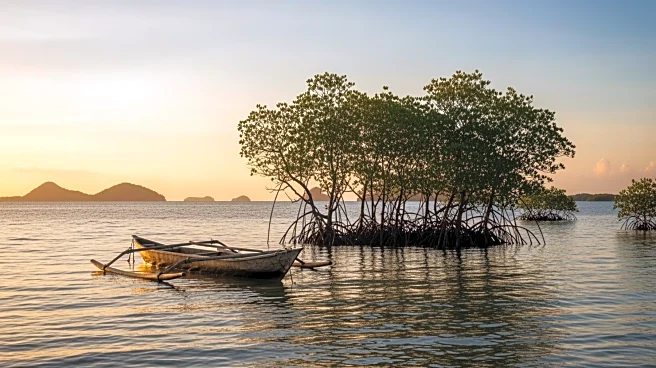
In response, many Pacific Islanders are adopting innovative adaptation strategies that blend traditional practices with scientific methods. These include mangrove restoration and new farming techniques to combat soil salinity and erratic weather patterns. Despite these efforts, the challenges remain significant, with some islands facing existential threats due to potential submersion by the end of the century.
Why It's Important?
The situation in the Pacific Islands highlights the urgent need for global climate action and adaptation strategies. These islands contribute less than 1% to global emissions but are disproportionately affected by climate change. The adaptation efforts being pioneered here could serve as models for other vulnerable regions worldwide. Moreover, the plight of these islands underscores the necessity for international support and funding to help them cope with the impacts of climate change. The broader implications include potential cultural loss and displacement of populations, which could have significant social and economic repercussions.
What's Next?
The future for Pacific Islanders involves continued adaptation efforts and seeking international support to bolster their resilience against climate change. The international community, particularly high-emission countries, faces increasing pressure to provide financial and technical assistance to these vulnerable nations. Additionally, there is a need for more localized data to tailor interventions effectively. The success of these efforts could influence global climate policies and funding mechanisms, emphasizing the importance of equitable support for low-emission countries facing severe climate impacts.
Beyond the Headlines
The narrative surrounding the inevitable submersion of Pacific Islands is being challenged by local leaders and scientists who argue that with proper planning and support, these islands can remain habitable. This perspective calls for a shift in how climate resilience is approached, advocating for proactive measures rather than resignation to loss. The ethical implications of climate-induced displacement and the preservation of cultural heritage are critical considerations in the global discourse on climate change.