



What's Happening?
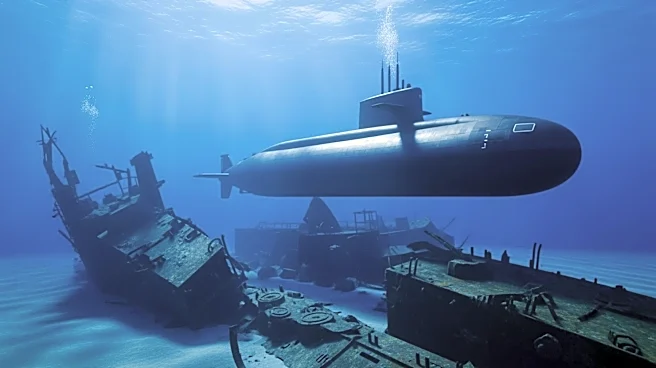
In a dramatic historical account, 38 U.S. Navy submariners survived a near-fatal incident when their submarine, the S-5, sank on September 1, 1920. The sub sank due to a crew member's error during a routine dive, leaving it stranded 180 feet below the surface.
The crew, led by skipper Charles Cooke, managed to partially raise the sub's stern above water, which was spotted by a passing steamship, Alanthus. After 37 hours, the crew was rescued with the help of the Alanthus and other ships. Despite attempts, the Navy could not salvage the S-5, and it was abandoned a year later.
Why It's Important?
This historical event highlights the dangers faced by early submariners and the resilience required to survive such perilous situations. The incident underscores the importance of safety protocols and technological advancements in naval operations. It also serves as a testament to the bravery and ingenuity of the crew, who managed to avert disaster through quick thinking and teamwork. The story of the S-5 is a reminder of the risks inherent in military service and the continuous need for improvements in submarine design and safety measures.
What's Next?
While the S-5 incident is a historical event, it continues to inform current naval practices and training. The lessons learned from such incidents contribute to the development of more advanced and safer submarines. The Navy's ongoing commitment to innovation and safety ensures that modern submariners are better equipped to handle emergencies. Additionally, the story of the S-5 may inspire further historical research and documentation, preserving the legacy of those who served aboard the ill-fated submarine.