







What's Happening?
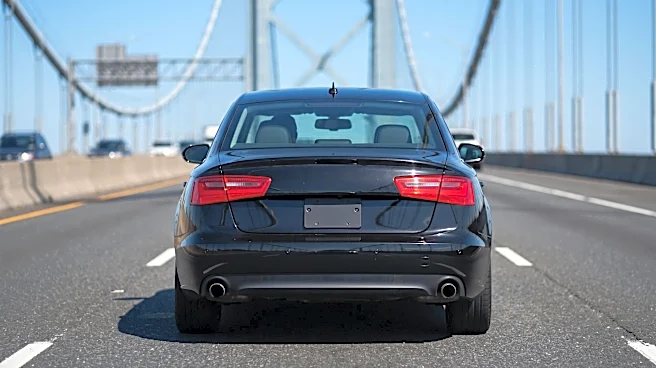
A driver in California was apprehended by the California Highway Patrol (CHP) in Solano County for using a device to conceal his vehicle's rear license plate. The incident involved a black Volkswagen Jetta observed on the highway with its license plate obscured,
which then became visible again. Upon stopping the vehicle, officers discovered a mechanism that allowed the driver to cover the license plate with the push of a button. The driver admitted to using this 'plate flipper' to avoid paying tolls on Express Lanes and bridges in the San Francisco Bay Area. Such devices, which can rotate, cover, or otherwise hide license plates, are designed to bypass automated toll collection cameras. California has stringent laws against these devices, with Vehicle Code 5201.1 prohibiting their use, sale, or manufacture.
Why It's Important?
This incident highlights a growing issue of toll evasion facilitated by technology, impacting revenue for infrastructure maintenance and development in California. The use of such devices undermines the fairness of toll systems, as compliant drivers bear the full cost while others illegally circumvent payments. The state's strict laws, including fines of $250 for use and $1,000 for sale or manufacture of these devices, reflect the seriousness with which authorities view this problem. Beyond the immediate fines, drivers can face additional penalties for unpaid tolls, which can also complicate vehicle registration. The prevalence of these devices could lead to increased enforcement efforts and potentially influence future toll collection technologies to counteract such evasion tactics.
What's Next?
Authorities in California are expected to continue their vigilance against the use of license plate concealment devices. Increased patrols and the deployment of advanced surveillance technologies may be implemented to detect and deter such violations. Law enforcement agencies might also collaborate with toll road operators to identify patterns of evasion and target areas where these devices are frequently used. Furthermore, there could be a push for public awareness campaigns to inform drivers about the legal consequences of using plate flippers. The ongoing challenge of toll evasion may also prompt legislative reviews to strengthen existing laws or introduce new measures to combat this issue effectively, ensuring equitable contributions to road infrastructure funding.
Beyond the Headlines
The use of license plate flippers to evade tolls touches upon broader ethical and societal implications regarding compliance with public regulations and the integrity of shared infrastructure funding. It represents a form of digital delinquency, where technology is exploited to bypass civic responsibilities. This trend could foster a sense of unfairness among law-abiding citizens who consistently pay their tolls, potentially eroding public trust in the fairness of the system. Moreover, the cat-and-mouse game between evaders and authorities could lead to an arms race in technology, with toll systems becoming more sophisticated to detect evasion, and evaders developing new methods to circumvent them. This ongoing struggle underscores the tension between individual attempts to avoid costs and the collective need to fund essential public services.