




What's Happening?
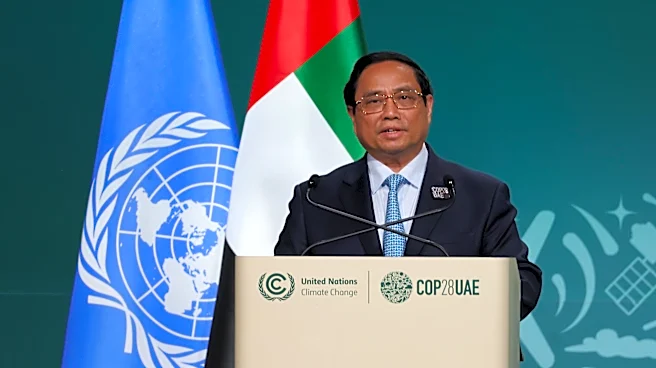
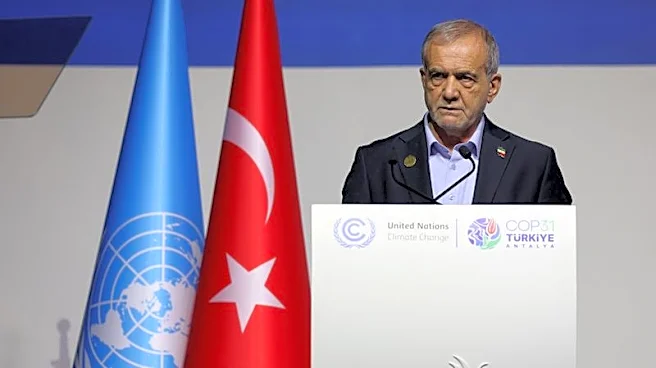
Australian Prime Minister Anthony Albanese was recorded on a hot mic discussing the potential dangers of keeping cellphones near the groin with his climate change minister, Chris Bowen. The conversation occurred during a break at the COP31 climate conference
in Turkey. Albanese initially warned Bowen about placing a phone in his breast pocket, citing concerns about interference with heart rhythm. The discussion then shifted to the impact of phone radiation on male reproductive organs, with both politicians making lighthearted remarks, seemingly unaware they were being filmed. A spokesman for the Prime Minister later stated that they were "having a joke in between meetings." This incident follows a 2022 study published in the journal Environmental Research, which suggested that electromagnetic waves from cellphones could reduce sperm mobility. However, the National Institutes of Health has not found conclusive evidence linking cellphone proximity to erectile dysfunction.
Why It's Important?
While this incident primarily involves Australian political figures, it highlights broader issues concerning public perception of scientific information and the conduct of public officials. The casual nature of the conversation, despite being caught on a hot mic, could influence public discourse on health concerns related to technology. For U.S. audiences, it serves as a reminder of the ongoing scientific debate surrounding cellphone radiation and its potential health effects, a topic that occasionally surfaces in American public health discussions. The incident also underscores the constant scrutiny faced by political leaders in the digital age, where private conversations can quickly become public, potentially impacting their image and public trust, regardless of the content's seriousness.
What's Next?
The immediate aftermath of the hot mic incident has seen a spokesman for Prime Minister Albanese downplaying the exchange as a joke between meetings. It is likely that the incident will generate some media attention and public discussion, particularly in Australia, regarding the appropriateness of such conversations in a public setting, even if unintended. There may be renewed, albeit brief, public interest in the scientific research concerning cellphone radiation and its health implications. However, given the lighthearted nature of the exchange and the lack of direct policy implications, it is unlikely to lead to significant political repercussions or policy changes. The focus for Prime Minister Albanese will likely shift back to the substantive outcomes of the COP31 conference and his subsequent diplomatic engagements.
Beyond the Headlines
This hot mic incident, while seemingly trivial, touches upon several deeper implications. It exemplifies the pervasive nature of surveillance in modern public life, where even informal conversations among leaders can be captured and disseminated. This constant visibility can lead to a more cautious and less spontaneous political discourse. Furthermore, the discussion about cellphone radiation, even in jest, reflects a broader societal anxiety about the health impacts of ubiquitous technology. While scientific consensus on many of these issues is still evolving, public figures' casual remarks can inadvertently amplify or diminish public concerns, regardless of scientific rigor. The incident also highlights the challenge for leaders to maintain a balance between their public and private personas, especially when operating in environments where privacy is increasingly eroded.