







What's Happening?
Governor Gretchen Whitmer has announced a $23 million state investment through the Make it in Michigan Competitiveness Fund (MIIMCF), which is set to leverage nearly $118 million in federal funding for nine key projects across Michigan. These projects are
anticipated to create over 1,000 jobs and aim to solidify Michigan's position in defense, aerospace, space technology, and advanced manufacturing sectors. The funding will also support critical areas such as workforce development, port infrastructure, community development, local parks, and the state's agriculture and food systems. Notable projects include $10.5 million for a new Readiness Center at the Olympia National Guard Armory in Detroit, $3.5 million for KMI Space to develop the Laelaps spacecraft, and $2.5 million for the Joe Louis Greenway in Detroit. Additionally, the University of Michigan received $2 million to expand nuclear workforce training, and the Port of Monroe was awarded $1.1 million for infrastructure upgrades. The MIIMCF has previously invested over $320 million, leveraging $1.2 billion in federal and $1.9 million in private funds, demonstrating a significant return on investment.
Why It's Important?
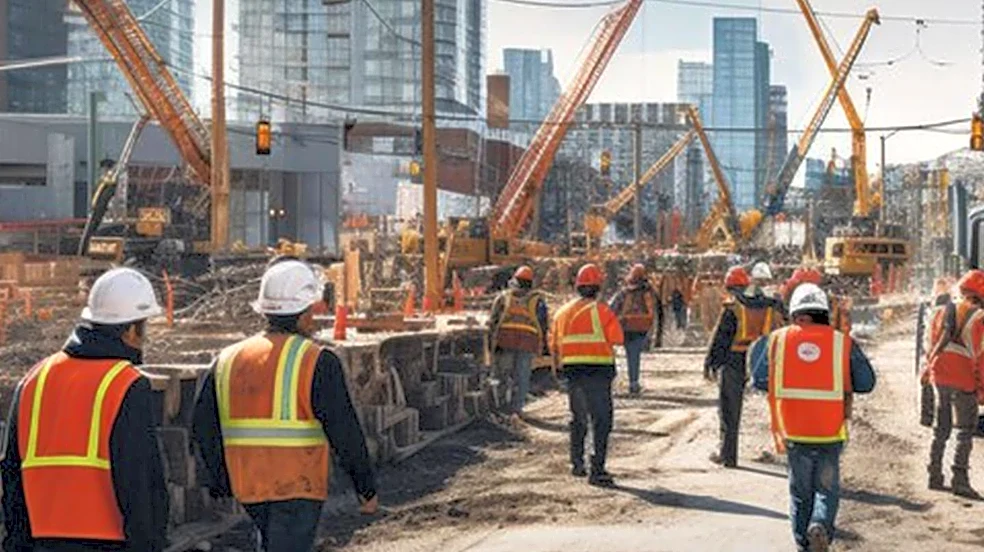
This substantial investment is crucial for Michigan's economic development and future competitiveness. By leveraging state funds to attract significant federal investment, Michigan is strategically positioning itself as a leader in high-growth industries like defense, aerospace, and advanced manufacturing. The creation of over 1,000 jobs will provide economic opportunities for residents across various sectors, from construction to specialized maritime roles and high-tech space engineering. The focus on workforce development, particularly in nuclear energy, addresses future industry demands and ensures a skilled labor force. Furthermore, improvements to port infrastructure will enhance trade capabilities and economic efficiency, while community development projects like the Joe Louis Greenway will improve quality of life and connectivity for residents. This initiative underscores a broader strategy to maximize federal infrastructure funding and stimulate local economies, making Michigan more resilient and attractive for businesses and residents.
What's Next?
The announced projects will proceed with their respective development and construction phases, with ongoing oversight from the Michigan Infrastructure Office. The state will continue to seek and secure additional federal funding opportunities, utilizing the MIIMCF as a critical tool for matching state contributions. Future developments will likely include the commencement of construction for the Olympia National Guard Armory, further development and testing of the Laelaps spacecraft by KMI Space, and the progression of the Joe Louis Greenway segment. The University of Michigan will begin expanding its nuclear workforce training programs, preparing students for future jobs in the energy sector. The Port of Monroe and other port projects will move forward with their planned upgrades, aiming to enhance maritime capabilities. The success of these initial projects will likely influence future funding allocations and strategic investments, as Michigan continues its efforts to attract federal dollars and foster economic growth across diverse sectors.
Beyond the Headlines
This investment reflects a broader national trend of states actively pursuing and leveraging federal infrastructure funding to drive local economic growth and technological advancement. Michigan's strategic use of the MIIMCF highlights a proactive approach to securing competitive federal grants, demonstrating how state-level initiatives can amplify national investment programs. The emphasis on emerging sectors like space technology and advanced manufacturing signals a long-term vision for economic diversification beyond traditional industries. Moreover, the inclusion of projects like the Joe Louis Greenway underscores a commitment to equitable development, ensuring that infrastructure improvements benefit communities directly by enhancing accessibility and quality of life. This integrated approach, combining economic development with community and environmental improvements, could serve as a model for other states looking to maximize the impact of federal infrastructure legislation and build sustainable, future-ready economies.