





What's Happening?
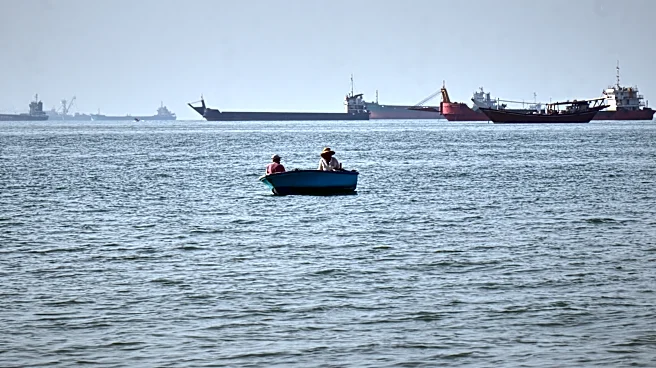
Oil prices have risen by approximately 2% following statements from U.S. President Donald Trump and Iran's foreign minister, which have further complicated hopes for a peaceful resolution to the conflict surrounding the Strait of Hormuz. The strait, a crucial
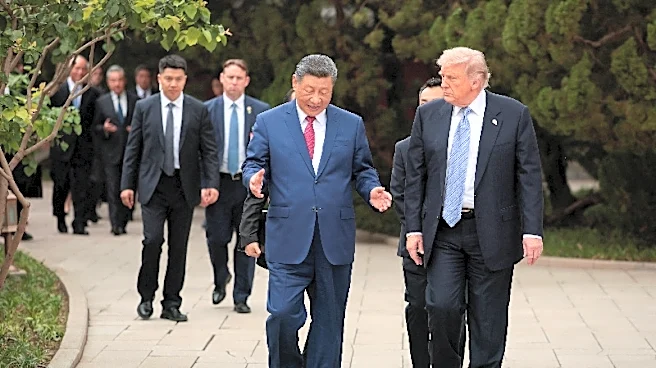
passage for global oil transport, remains blocked, contributing to market uncertainty. President Trump has reiterated the need for the strait to be reopened and has expressed a shared stance with Chinese President Xi Jinping on preventing Iran from acquiring nuclear weapons. Despite a ceasefire, the relationship between the U.S. and Iran remains strained, with Iran expressing distrust and readiness for both diplomatic and military responses.
Why It's Important?
The Strait of Hormuz is a vital artery for global oil supply, and its closure has significant implications for energy markets worldwide. The ongoing tensions between the U.S. and Iran could lead to further disruptions in oil supply, affecting prices and economic stability. The situation also impacts regional security in the Middle East, with potential consequences for countries reliant on the strait for oil exports. The U.S.'s diplomatic efforts with China and its approach to Iran could influence international relations and economic policies, affecting stakeholders across the energy sector.
What's Next?
The international community will be closely monitoring developments in the Strait of Hormuz and any progress in diplomatic negotiations. The potential for military escalation remains a concern, with implications for global energy markets and regional stability. Stakeholders, including governments and businesses, will need to prepare for potential disruptions and shifts in the geopolitical landscape. The outcome of U.S.-China negotiations and any changes in China's stance on purchasing Iranian oil will also be key factors to watch.