




What's Happening?
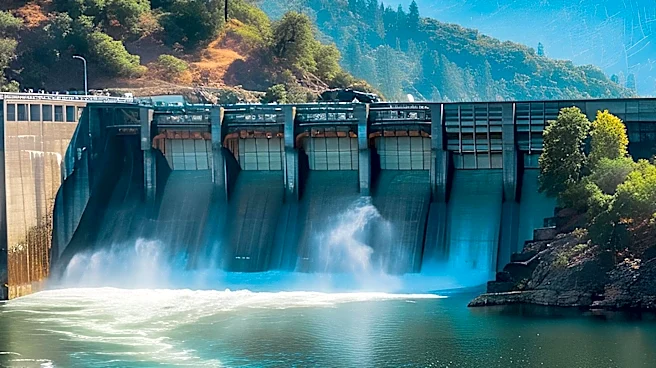
The California state auditor's office has released a report indicating that 57 dams across the state are in poor or unsatisfactory condition. While the specific locations of these dams are not disclosed for security reasons, most are situated near densely
populated areas such as Los Angeles, San Diego, and the Bay Area. The report highlights that if these high-risk dams were to fail, they could endanger up to 1.5 million people and cause over $265 billion in economic damage. Some of these dams have been deficient for at least nine years, with one century-old dam suffering from concrete deterioration and seismic instability. The audit criticizes the Department of Water Resources for not fully utilizing its enforcement authority to ensure timely repairs by dam owners.
Why It's Important?
This assessment is critically important for public safety and economic stability in California. The potential for catastrophic failure of these dams poses an immediate threat to human lives and could lead to immense financial losses, disrupting communities and infrastructure. The report underscores a systemic issue where dam owners, often local agencies or private companies, are not legally required to conduct formal planning or maintain financial reserves for large-scale repairs or emergencies. This lack of mandated financial preparedness, coupled with the high cost of repairs (estimated at over $28 billion for all state dams), creates a significant vulnerability. The audit's findings highlight a critical gap in state oversight and funding mechanisms for essential infrastructure, potentially leaving millions at risk and the state vulnerable to massive economic setbacks.
What's Next?
The state auditor's office has provided a series of recommendations to address the critical dam safety issues. These include amending state law to empower the Department of Water Resources (DWR) to order the condemnation and decommissioning of dams if other enforcement methods fail. Additionally, the audit suggests allowing DWR to charge dam owners fees to support its oversight activities and requiring dam owners to maintain emergency funds for maintenance and repairs. The DWR, in its response, has disputed some of the audit's conclusions, arguing a fundamental misunderstanding of flood management complexities and dam safety. This indicates a potential for legislative debate and policy changes regarding dam safety regulations, funding, and enforcement in the near future, as the state grapples with how to implement these recommendations and mitigate the identified risks.
Beyond the Headlines
The issue of deteriorating dams in California extends beyond immediate safety concerns to touch upon broader themes of infrastructure aging, climate change resilience, and governmental accountability. Many of the deficient dams are old, built before modern safety standards, highlighting a nationwide challenge of maintaining aging infrastructure. The increasing frequency and intensity of extreme weather events due to climate change further exacerbate the risks associated with these dams, as they may be less equipped to handle severe flood events. The audit also brings to light the complex interplay between state oversight, local ownership, and private responsibility in managing critical public assets. The debate between the auditor's office and the DWR points to potential disagreements on the severity of the problem and the most effective solutions, which could delay necessary actions and prolong the risks to the public. This situation underscores the need for a comprehensive, long-term strategy for infrastructure investment and maintenance.