



What's Happening?
A delegation from the American International University–Bangladesh (AIUB) recently attended a training program on Digital Manufacturing at Birmingham City University (BCU) in the United Kingdom. This initiative was part of the British Council's Transnational
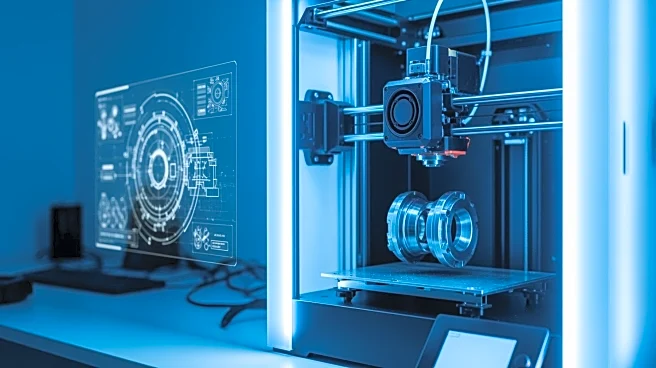
Education (TNE) Exploratory Grant. The delegation included Professor Dr. Md Saniat Rahman Zishan, Dr. Chowdhury Akram Hossain, and Mahamudul Hassan. During their visit, the delegates were introduced to BCU's academic mission and facilities, such as the STEAMhouse and its Creative Lab, which features advanced 3D printing and CNC machining technologies. The program included keynote lectures, technical sessions, and research discussions led by BCU academics and researchers. Topics covered ranged from digital manufacturing and thermal management to Industry 4.0 to 6.0 and renewable energy applications. The event concluded with a closing ceremony hosted by the Bangladesh Assistant High Commission in Birmingham, emphasizing the commitment to future academic and industrial collaboration.
Why It's Important?
This training program is significant as it highlights the growing collaboration between international educational institutions in the field of digital manufacturing and advanced technologies. By participating in such programs, AIUB is positioning itself to enhance its academic and research capabilities, which can lead to improved educational outcomes for its students. The focus on topics like Industry 4.0 to 6.0 and renewable energy applications is particularly relevant as these areas are critical for future technological advancements and sustainability efforts. This collaboration also strengthens the ties between Bangladesh and the United Kingdom, fostering international cooperation in education and research.
What's Next?
Following the successful completion of the training program, AIUB and Birmingham City University are expected to explore further opportunities for collaboration. This could include joint research projects, student and faculty exchanges, and the development of new academic programs that incorporate the latest advancements in digital manufacturing and related fields. Such initiatives could enhance the global competitiveness of both institutions and provide students with valuable international exposure and experience.