



What's Happening?
The U.S. military is increasingly integrating artificial intelligence (AI) into its operations, focusing on enhancing intelligence processing and target selection. This development is part of a broader trend in AI warfare, as highlighted in Wynton Hall's
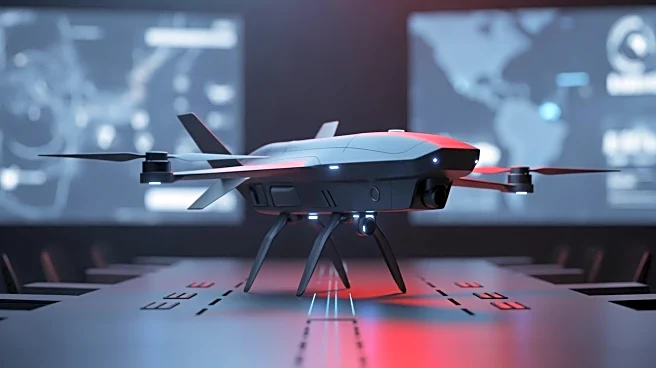
book 'Code Red: The Left, the Right, China, and the Race to Control AI.' The book discusses the use of AI in military contexts, such as the deployment of autonomous drones like the Kargu-2, which can conduct precision strikes without human intervention. These advancements are reshaping military strategies, with AI systems like those used by the Israel Defense Forces (IDF) demonstrating the potential for rapid target identification and engagement. The IDF's use of AI systems such as The Gospel, Lavender, and Where’s Daddy? has significantly accelerated the process of identifying and neutralizing threats.
Why It's Important?
The integration of AI into military operations represents a significant shift in how wars are fought and national security is maintained. The ability of AI to process vast amounts of data quickly and accurately enhances the military's capability to respond to threats efficiently. However, this also raises concerns about the proliferation of autonomous weapons and the potential for these technologies to fall into the hands of adversaries. The democratization of AI weaponry could lower the barrier for non-state actors and rogue nations to acquire advanced military capabilities, posing new security challenges. The U.S. must address these challenges to maintain its military edge and ensure that AI technologies are used responsibly and ethically.
What's Next?
As AI technologies continue to evolve, the U.S. military will likely increase its investment in AI research and development to stay ahead of potential adversaries. This includes addressing the gap between Silicon Valley innovation and national security needs, as well as managing the risks associated with AI alignment and containment. Policymakers and military leaders will need to develop strategies to mitigate the risks of AI-powered terrorism and the autonomous weapons race. International cooperation and regulation may also play a role in ensuring that AI technologies are used in a manner that promotes global security and stability.
Beyond the Headlines
The ethical implications of AI in warfare are profound, as autonomous systems capable of making life-and-death decisions challenge traditional notions of accountability and human oversight. The potential for AI to be used in ways that violate international humanitarian law is a concern that requires careful consideration. Additionally, the rapid pace of AI development may outstrip existing regulatory frameworks, necessitating new policies and agreements to govern the use of AI in military contexts. The long-term impact of AI on global power dynamics and the nature of warfare will be significant, requiring ongoing dialogue and collaboration among nations.