




What's Happening?
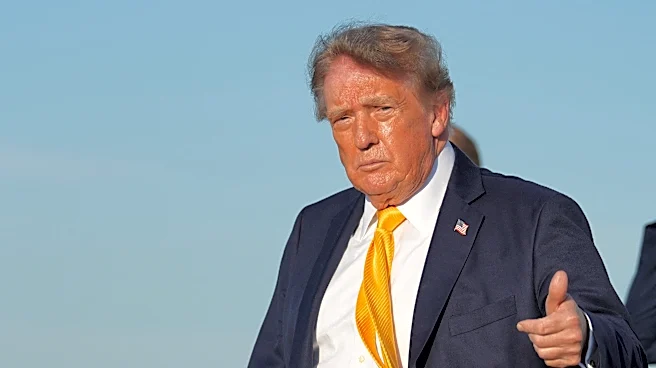
As of September 9, 2026, President Trump's approval rating is approximately 40%, according to major polling groups such as RealClearPolitics and Ballotpedia. While individual polls vary, RealClearPolitics reports a 39.7% approval, and Ballotpedia shows
40%. Other polls indicate figures ranging from 32% (Quinnipiac University) to 37% (ABC News/Washington Post/Ipsos). Despite the overall lower approval, President Trump maintains a steady approval rating among Republicans, which remains between 75% and 80% across national surveys. Historically, the lowest individual approval rating for a U.S. president in a single poll was 22%, held by Harry S. Truman in February 1952.
Why It's Important?
President Trump's current approval rating of around 40% is a critical indicator of public sentiment as the nation approaches the midterm elections. This figure, while not the lowest in presidential history, reflects a challenging political landscape for the incumbent administration. The consistent support from his Republican base, holding steady between 75% and 80%, underscores the polarization within the American electorate. However, the overall approval rating suggests that a significant portion of independent and opposition voters remain unconvinced by his performance. This dynamic is crucial for understanding the potential outcomes of upcoming elections, as it highlights the need for the Republican party to mobilize its core supporters while also attempting to appeal to a broader, more skeptical electorate. The stability of his base, contrasted with lower overall approval, indicates a deeply divided political environment where electoral success often hinges on turnout and the ability to energize specific demographic groups.
What's Next?
With President Trump's approval rating hovering around 40%, the focus will intensify on how these numbers influence the upcoming midterm elections. Political strategists for both major parties will closely analyze these figures to tailor their campaigns, messaging, and resource allocation. For the Republican party, maintaining the strong approval among their base will be paramount, likely leading to efforts to energize these voters and ensure high turnout. For the Democratic party, the lower overall approval rating for President Trump presents an opportunity to attract swing voters and those dissatisfied with the current administration. The coming months will likely see increased polling, with each new survey potentially shifting the narrative and influencing campaign strategies. The performance of the economy, particularly inflation and employment figures, will also continue to play a significant role in shaping public opinion and, consequently, President Trump's approval ratings.
Beyond the Headlines
The sustained 40% approval rating for President Trump, coupled with strong Republican base support, highlights a significant aspect of modern American politics: the entrenchment of partisan loyalty. This phenomenon suggests that a substantial segment of the electorate remains committed to their party and its leader, even when overall public opinion is less favorable. This deep-seated loyalty can make it challenging for political opponents to sway voters purely on policy issues or general performance metrics. It also implies that political discourse may continue to be characterized by appeals to core ideological values rather than broad consensus-building. Understanding this dynamic is crucial for comprehending the resilience of certain political movements and the difficulties in achieving bipartisan cooperation. The historical comparison to President Truman's low approval rating also serves as a reminder that presidential popularity can fluctuate dramatically, but the underlying partisan divisions often remain a constant force in the political landscape.