




What's Happening?
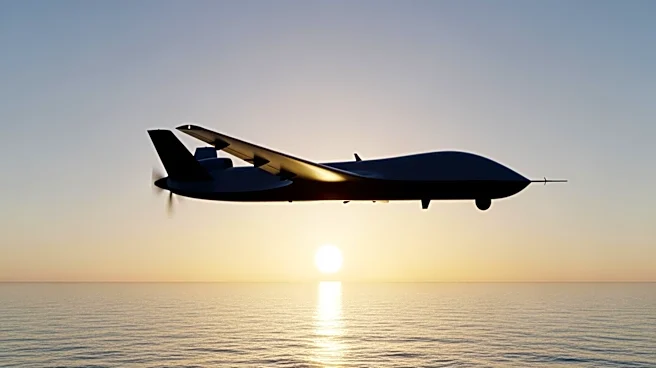
Boeing has successfully completed the first test flight of its operationally-configured MQ-25 Stingray autonomous refuelling drone. The flight took place on April 25 at the Boeing industrial site at MidAmerica airport in Mascoutah, Illinois. This milestone
comes seven years after initial test flights with a prototype. The MQ-25 is designed to provide aerial refuelling support to the US Navy's carrier air wings, replacing the current 'buddy tanking' system using F/A-18E/F strike fighters. The test involved ground operators from Boeing and the US Navy executing maneuvers to validate the drone's flight controls and engine performance. The US Navy plans to integrate the MQ-25 into its carrier operations, with a target for initial operational capability by 2027.
Why It's Important?
The introduction of the MQ-25 Stingray represents a significant advancement in naval aviation, as it will free up F/A-18E/F Super Hornet fighters from refuelling duties, allowing them to focus on combat missions. This shift is expected to enhance the combat capacity of carrier air wings. The MQ-25's ability to autonomously return to carriers using advanced landing systems also marks a step forward in integrating unmanned systems into naval operations. The US Navy's contract with Boeing for up to 76 Stingrays underscores the strategic importance of this technology in maintaining naval superiority.
What's Next?
The US Navy will continue the MQ-25 flight test campaign throughout 2026, focusing on expanding the drone's operational envelope and integrating it with ground control infrastructure. The test aircraft will be moved to NAS Patuxent River for further evaluations. As the program progresses, the Navy will work towards achieving initial operational capability by 2027, which will involve extensive testing and validation of the MQ-25's performance in various operational scenarios.