






What's Happening?
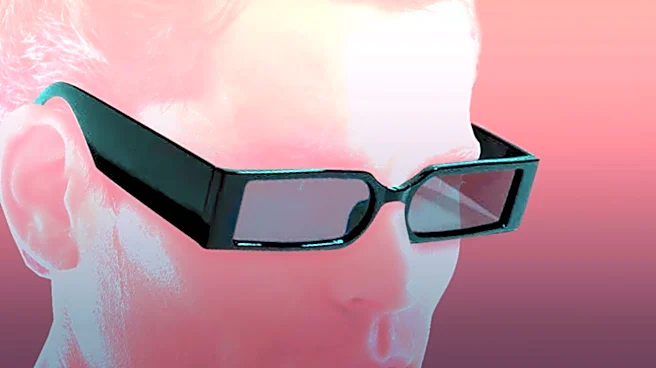
Meta has filed a patent for AI-powered camera glasses that incorporate facial recognition, expression analysis, and social graph information to identify individuals and automatically create highlight reels. These glasses are designed to capture moments
based on the wearer's relationships and the emotional expressions of those around them. For instance, the system could identify the wearer's spouse and center them in a frame, or recognize laughter between two people and focus the camera on them. The patent also describes the ability to connect newly captured moments with a collection of 'episodic memories,' allowing users to search for past interactions with individuals. While the patent outlines a potentially convenient way to document personal experiences, it also raises significant privacy concerns due to its advanced surveillance capabilities.
Why It's Important?
This patent filing by Meta is important because it reveals the company's continued exploration into highly advanced, and potentially intrusive, wearable AI technology. The integration of facial recognition, expression analysis, and social graph data into everyday glasses could fundamentally alter personal privacy and public interaction. For U.S. society, this technology could lead to a future where casual encounters are automatically recorded and indexed, creating searchable records of real-world interactions. This raises critical questions about consent, data ownership, and the boundaries of personal space in an increasingly surveilled world. The potential for such devices to identify and analyze individuals without their explicit knowledge or permission could spark widespread debate and calls for stricter regulations on AI and biometric data collection, impacting civil liberties and digital rights.
What's Next?
While Meta regularly patents ideas that may not become consumer products, the company has previously explored facial recognition for its glasses, with unreleased code for a 'NameTag' feature found in its AI companion app. This suggests that the underlying technology is actively being developed. The patent's detailed description indicates that Meta is considering how to integrate these advanced features into future iterations of its smart glasses. Given the significant privacy implications, any move to implement such features would likely face intense scrutiny from privacy advocates, regulatory bodies, and the public. Legal challenges, similar to the criminal complaint filed by German digital-rights group HateAid against Meta's current glasses, could become more frequent, potentially leading to legislative actions to restrict the use of facial recognition in consumer devices. Meta will need to navigate these ethical and legal challenges carefully if it intends to bring such technology to market.
Beyond the Headlines
The deeper implications of Meta's AI camera glasses extend beyond immediate privacy concerns to the very nature of human memory and social interaction. If devices can automatically curate and store 'episodic memories' based on facial recognition and emotional cues, it could alter how individuals recall and value their experiences. The technology could create a 'perfect' memory, but at the cost of genuine, unmediated human connection. Furthermore, the ability to identify and analyze individuals based on their social graph could lead to new forms of social sorting and discrimination, where interactions are filtered or prioritized based on pre-existing relationships. This raises profound ethical questions about the role of AI in shaping personal identity, social dynamics, and the authenticity of human relationships in an increasingly augmented reality.