



What's Happening?
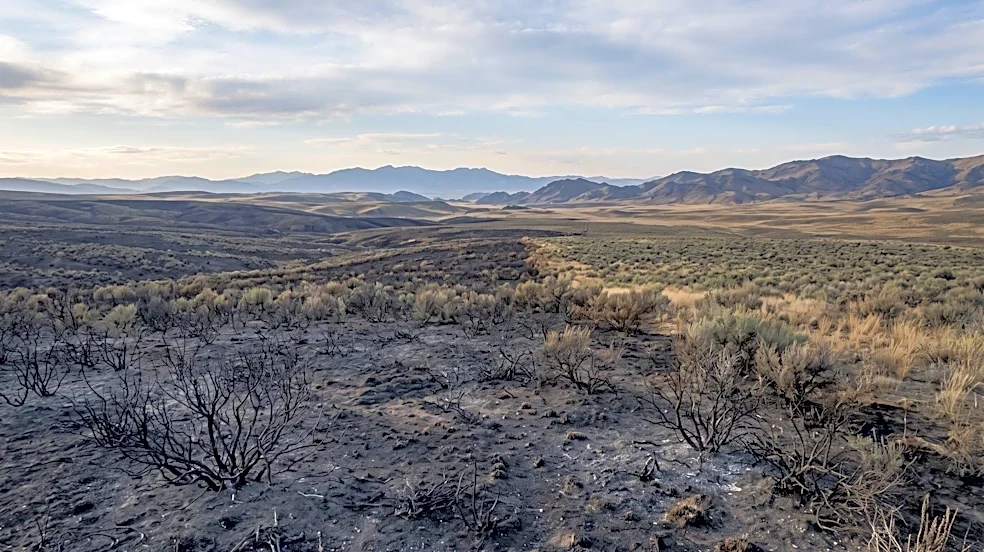
The Smore Fire, which ignited near Melba, Idaho, has been declared 100% contained after scorching more than 2,000 acres. The blaze was initially reported as a vegetation fire near Coyote Butte, prompting a coordinated response from the Bureau of Land
Management (BLM), Kuna Fire, Melba Fire, and Upper Deer Flat Fire departments. The Idaho Department of Lands has identified the fire as human-caused. The incident began around 11 A.M. on the day of its outbreak. The containment signifies that firefighters have established control lines around the entire perimeter of the fire, preventing further spread. This development follows extensive efforts by multiple fire agencies to bring the large-scale vegetation fire under control.
Why It's Important?
The containment of the Smore Fire is crucial for the environmental and economic stability of the affected region in Idaho. Uncontrolled wildfires pose significant threats to natural habitats, air quality, and local infrastructure, including agricultural lands and residential properties. The human-caused nature of the fire underscores the ongoing need for public awareness and preventative measures to mitigate wildfire risks, especially in areas prone to vegetation fires. The involvement of multiple agencies highlights the collaborative effort required to manage and suppress large fires, demonstrating the importance of inter-agency cooperation in emergency response. The successful containment prevents further ecological damage and reduces the financial burden associated with prolonged firefighting efforts and potential property losses.
What's Next?
With the Smore Fire now 100% contained, the immediate focus will likely shift to monitoring for any potential flare-ups and beginning rehabilitation efforts for the affected land. Investigations into the exact cause of the human-ignited fire will continue, which could lead to enforcement actions or public awareness campaigns aimed at preventing similar incidents in the future. Local authorities and environmental agencies will assess the long-term ecological impact on the 2,000 acres burned and develop strategies for restoration. Residents in the vicinity will be able to return to normal activities without the immediate threat of the fire, though air quality and environmental advisories may remain in effect temporarily as the area recovers.
Beyond the Headlines
The Smore Fire's containment, while a relief, brings to light broader issues concerning land management and human interaction with natural environments. The designation of the fire as human-caused points to a persistent challenge in wildfire prevention, often stemming from accidental ignitions or negligence. This incident could prompt a review of current land use policies and public access regulations in fire-prone areas, potentially leading to stricter controls or enhanced educational programs. Furthermore, the scale of the fire, exceeding 2,000 acres, highlights the increasing intensity and frequency of wildfires, which some attribute to changing climate patterns and prolonged drought conditions. The long-term ecological recovery of such a large area will be a complex process, impacting biodiversity, soil health, and water resources for years to come, underscoring the interconnectedness of environmental systems and human activity.