
What's Happening?
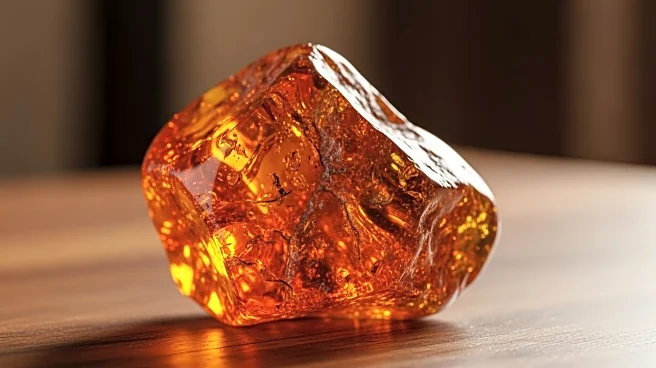
A 3.5-kilogram piece of amber, used as a doorstop for decades in Romania, has been appraised at over $1 million. Discovered in a stream bed in southeast Romania, the amber, known as rumanite, is one of the largest
intact pieces found globally. The amber, estimated to be between 38 to 70 million years old, was sold to the Romanian state and is now housed at the Provincial Museum of Buzau. This discovery underscores the geological and historical significance of amber, which is fossilized tree resin that can preserve ancient biological specimens.
Why It's Important?
The discovery of such a significant piece of amber highlights the potential for valuable geological finds in everyday settings. Amber is not only prized for its aesthetic qualities but also for its scientific value, as it can contain preserved specimens that offer insights into ancient ecosystems. This find emphasizes the importance of geological preservation and the potential for similar discoveries to contribute to scientific knowledge and cultural heritage. The amber's valuation also reflects its rarity and the economic potential of geological resources.
Beyond the Headlines
The amber's discovery raises questions about the preservation and study of geological artifacts. As a national treasure, it highlights the role of museums in safeguarding cultural and scientific heritage. The find also prompts discussions on the ethical considerations of selling and appraising natural resources, balancing economic interests with conservation efforts. Additionally, the amber's ability to preserve ancient life forms offers a unique window into past environments, potentially informing current ecological and climate studies.