






What's Happening?
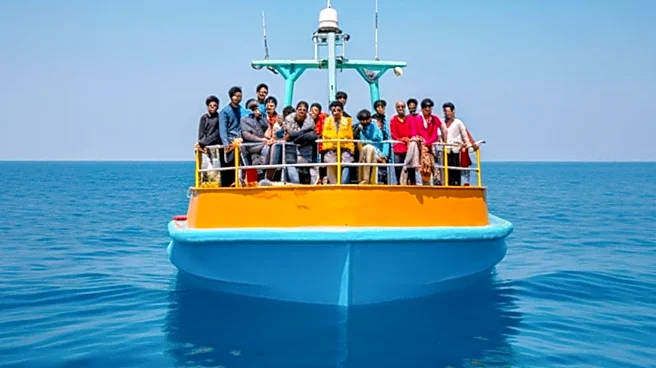
The Hellenic Coast Guard, with support from the European Border and Coast Guard Agency (Frontex), rescued a total of 131 migrants from three separate boats in overnight operations south of Gavdos, near Crete. The operations were coordinated by Greece’s
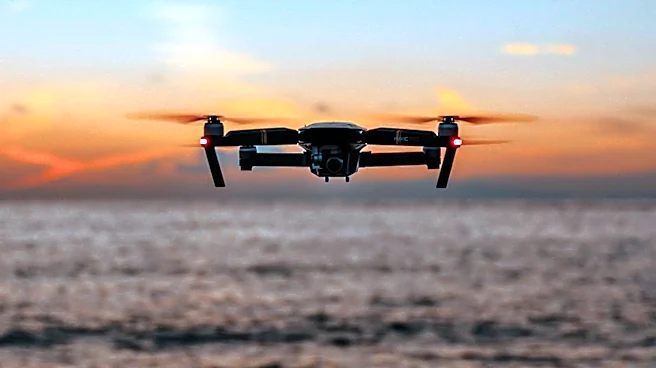
Joint Rescue Coordination Center. In the first incident, a Frontex drone located 43 foreign nationals on a single boat approximately 20 nautical miles south of Gavdos. A Frontex vessel was dispatched to recover them and transported them to the port of Paleochora on Crete’s southwestern coast. A few hours later, a Frontex aircraft located another 88 migrants on two additional boats in the same general area, and they were also rescued by a Frontex vessel.
Why It's Important?
These rescue operations highlight the ongoing humanitarian crisis and migratory pressures in the Mediterranean Sea, particularly along the southern European borders. The involvement of Frontex underscores the collaborative effort required between national authorities and European agencies to manage these complex situations. The use of drones and aircraft by Frontex demonstrates the increasing reliance on advanced technology for surveillance and rescue missions in vast maritime areas. The continuous flow of migrants, often in unseaworthy vessels, poses significant challenges to search and rescue capabilities, resource allocation, and the processing of asylum claims in frontline states like Greece. This situation also brings to the forefront the broader debate within the European Union regarding burden-sharing and comprehensive migration policies.
What's Next?
The 131 rescued migrants have been brought ashore at the port of Paleochora. Following their arrival, they will undergo standard procedures, which typically include identification, health checks, and the initiation of asylum applications or other administrative processes. Greek authorities, supported by Frontex, will continue to monitor the waters south of Gavdos and other maritime routes for further migrant crossings. The ongoing coordination between Greece’s Joint Rescue Coordination Center and Frontex is expected to continue, utilizing aerial and maritime assets to detect and respond to distress calls. The incident will likely contribute to ongoing discussions within the EU about strengthening external borders and developing more effective and humane approaches to migration management.
Beyond the Headlines
The repeated rescue of large groups of migrants in the Mediterranean points to the desperate circumstances driving individuals to undertake perilous sea journeys. Beyond the immediate rescue, the long-term implications involve the integration challenges for host countries, the ethical considerations of border control, and the need for international cooperation to address the root causes of migration. The involvement of Frontex, while crucial for rescue, also raises questions about the agency's evolving role in border management and its impact on human rights. The continuous flow of migrants also fuels political debates within EU member states, often leading to divergent approaches to asylum and immigration policies. This situation underscores the complex interplay of humanitarian concerns, national sovereignty, and international law in the context of global migration.