







What's Happening?
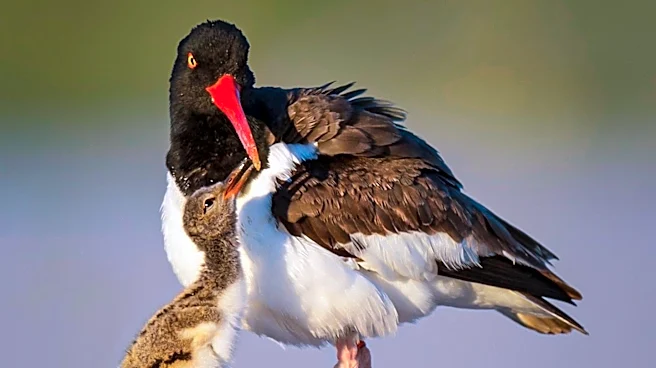
American oystercatchers, once nearly extinct in New England due to hunting and egg collecting, are experiencing a significant population rebound along the Atlantic and Gulf coasts. This recovery is attributed to a decade-long, $10 million conservation
campaign involving 35 organizations across 16 states. The initiative focused on protecting nesting sites from predators and educating the public about these birds. From 2008 to 2023, the oystercatcher population increased by 45%, a notable success given the general decline in shorebird populations in North America. Conservationists have implemented measures such as fencing nesting beaches and building elevated nests to counter threats like rising sea levels and erosion.
Why It's Important?
The resurgence of the American oystercatcher is a testament to the effectiveness of coordinated conservation efforts. This success story highlights the potential for reversing declines in other imperiled species through dedicated action. The recovery of oystercatchers also underscores the importance of public education and habitat protection in conservation strategies. However, ongoing threats such as climate change and weakened federal protections pose challenges to maintaining these gains. The efforts to protect oystercatchers could serve as a model for similar initiatives aimed at other vulnerable species, emphasizing the need for sustained commitment and collaboration among conservation groups.
What's Next?
Future conservation efforts will need to address the challenges posed by climate change, particularly rising sea levels and habitat erosion. States like Georgia are already taking proactive measures by building elevated nesting platforms and using dredged materials to create nesting islands. Additionally, changes to the Endangered Species Act could impact the protection of nesting sites, necessitating vigilance from environmental groups to prevent habitat destruction. Continued public education and habitat management will be crucial in ensuring the long-term survival of the American oystercatcher and other shorebirds.