



What's Happening?
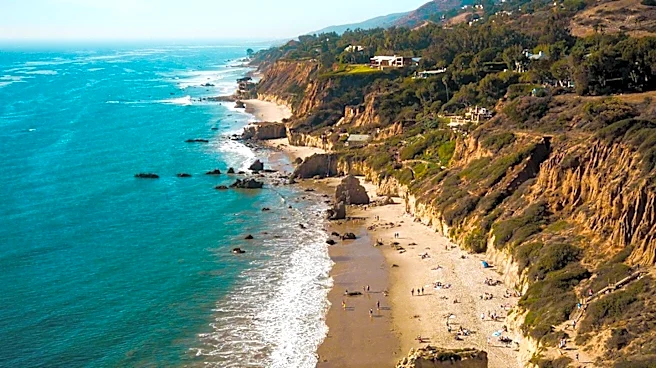
A century after it was unjustly seized, a prime piece of Southern California oceanfront property known as Bruce's Beach has been formally returned to the descendants of Willa and Charles Bruce, and subsequently sold back to Los Angeles County for nearly
$20 million. The Bruce family, a Black couple, originally purchased the land in 1912 and established a popular resort for African American beachgoers during an era of racial segregation. However, facing harassment from white neighbors and the Ku Klux Klan, local officials in Manhattan Beach used eminent domain in 1924 to seize the property, claiming it was needed for a municipal park. The family received a court settlement of $14,500 in 1929, and the resort was demolished. The land remained largely unused for decades, eventually transferring to the State of California in 1948 and then to Los Angeles County in 1995, where a lifeguard training facility was built. The recent return and sale were made possible by California Senate Bill 796, which removed restrictions preventing the land's transfer back to the family.
Why It's Important?
This resolution represents a significant act of restorative justice, addressing a historical wrong that deprived a Black family of their generational wealth and property due to racial discrimination. The case highlights the long-lasting impact of eminent domain abuse and systemic racism on Black communities in the United States. The sale of the land back to Los Angeles County for its appraised value of $19,975,000 allows the Bruce family to finally rebuild the generational wealth they were denied for nearly a century. This event sets a precedent for how governmental bodies can acknowledge and rectify past injustices, offering a model for other communities grappling with similar historical land seizures. It underscores the importance of legislative action, like Senate Bill 796, in facilitating such reparations and demonstrates the power of community activism in bringing these issues to the forefront.
What's Next?
The property will remain under Los Angeles County ownership and continue to serve as a lifeguard training facility. The agreement included an initial lease-back arrangement where the family leased the property to the county for $413,000 per year before exercising their option to sell. The decision by the family to sell was influenced by local zoning rules that prevented commercial development on the property, making it difficult to generate income from the land itself. This resolution concludes a lengthy legal and historical battle, providing financial restitution to the Bruce family. The case may inspire further efforts in other jurisdictions to address historical land dispossession and racial injustices, potentially leading to more legislative initiatives and community-led campaigns for reparations.
Beyond the Headlines
The Bruce's Beach case delves into the deeper implications of historical land ownership and racial equity in the U.S. It exposes how legal mechanisms, such as eminent domain, were historically weaponized to dispossess Black Americans of their property and economic opportunities. The century-long struggle for the return of Bruce's Beach underscores the enduring legacy of systemic racism and the challenges faced by marginalized communities in seeking justice. The resolution, while a significant step, also prompts reflection on the broader societal responsibility to acknowledge and repair historical harms. It highlights the ethical imperative for governments to not only return stolen property but also to provide fair compensation that accounts for lost generational wealth and opportunities. This event contributes to the ongoing national dialogue about reparations and the various forms they can take, from direct financial compensation to policy changes aimed at preventing future injustices.