




What's Happening?
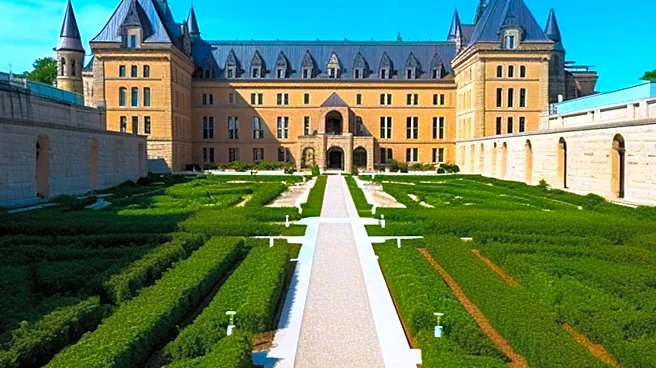
Oheka Castle, a French Renaissance-style chateau located in Sands Point on Long Island, was constructed between 1914 and 1919. This historic estate served as the country residence for financier and philanthropist Otto Hermann Kahn. It holds the distinction
of being the largest private house ever built in New York and the second-largest private residence in the United States, surpassed only by Biltmore. The castle originally featured 127 rooms and spans approximately 109,000 to 112,000 square feet. During the 1920s, Oheka Castle was renowned as Kahn’s summer 'party palace,' hosting an array of distinguished guests including royalty, heads of state, and Hollywood celebrities. Its grandeur and Long Island setting have led to speculation that it may have inspired the mansion depicted in F. Scott Fitzgerald’s 'The Great Gatsby.' The estate has also been utilized as a filming location, standing in for elite estates in various productions.
Why It's Important?
Oheka Castle represents a significant piece of American architectural and social history, embodying the opulence and grandeur of the Gilded Age on Long Island's Gold Coast. Its sheer scale and intricate design reflect the immense wealth and influence of early 20th-century American industrialists. The castle's role as a social hub for prominent figures of its time highlights a period of extravagant entertaining and cultural exchange among the elite. Furthermore, its potential influence on literary works like 'The Great Gatsby' and its use as a visual model for fictional estates, such as Xanadu in 'Citizen Kane,' underscore its lasting cultural impact and symbolic value. The preservation and recognition of such estates are crucial for understanding the historical development of American society, architecture, and the arts, offering insights into past lifestyles and societal structures.
What's Next?
While the source does not explicitly detail future plans for Oheka Castle, its continued operation as a historic venue suggests ongoing efforts to maintain its legacy. As a prominent landmark, it is likely to remain a significant site for events, tourism, and potentially further cultural productions. The castle's historical and architectural importance will continue to draw interest from preservationists, historians, and the public. Future initiatives might focus on enhancing visitor experiences, conducting further historical research, or engaging in restoration projects to preserve its unique features. Its status as a cultural icon ensures its continued relevance in discussions about American heritage and luxury estates.
Beyond the Headlines
Beyond its immediate function as a historic estate, Oheka Castle offers a deeper look into the socio-economic dynamics of early 20th-century America. The estate's operation, which resembled a small hotel with 126-127 full-time staff, 39 working fireplaces, and an underground tunnel system for servants, illustrates the vast disparities in wealth and the intricate social hierarchies of the era. This level of domestic infrastructure highlights the labor-intensive nature of maintaining such grand properties and the extensive workforce required to support the lifestyles of the ultra-wealthy. The castle serves as a tangible reminder of a bygone era of American aristocracy, prompting reflections on wealth distribution, labor practices, and the evolution of luxury and domestic service in the United States.