


What's Happening?
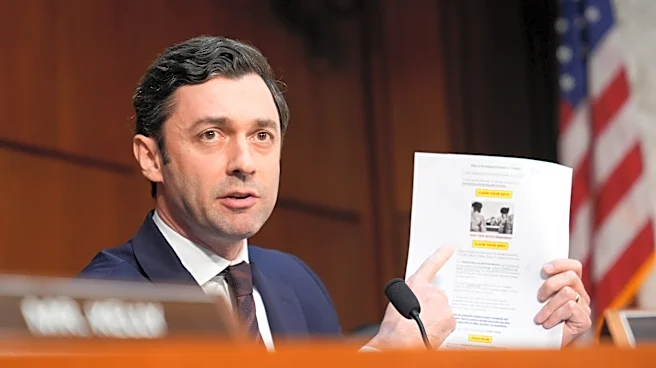
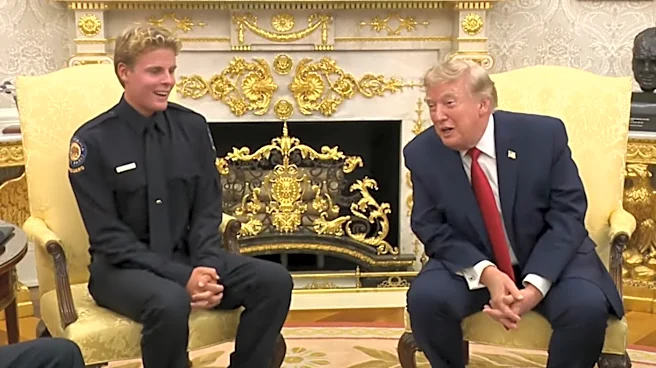
The White House launched a personal attack against CNN senior White House correspondent Kristen Holmes via social media after she questioned President Trump in the Oval Office. Holmes asked President Trump to respond to a comment made by Democratic Senator
Jon Ossoff, who suggested President Trump 'doesn’t want to do the job' and instead 'wants to build his ballroom and travel with Natalie on their apparently defenseless flying palace gifted by the emir of Qatar,' referencing his executive assistant, Natalie Harp. President Trump dismissed Holmes, calling Ossoff a 'Pee-wee Herman lookalike' and later directly criticized Holmes, calling her 'fake news' and 'disrespectful.' The White House's 'rapid response' social media account posted a clip of the exchange, tagging Holmes and calling her a 'disgraceful, humiliating embarrassment' and later criticizing her for asking a 'disgusting and inhumane question' that her children would be 'sickened and embarrassed' by. CNN defended Holmes, stating she asked a 'tough, relevant, and newsworthy question' and that personal attacks on journalists are 'beneath the office.'
Why It's Important?
This incident highlights the escalating tensions between the White House and the press, particularly concerning President Trump's long-standing contentious relationship with certain media outlets and journalists. The personal nature of the attacks, extending to a journalist's family, represents a significant departure from traditional White House-press interactions and raises serious concerns about the erosion of journalistic norms and the freedom of the press. Such actions can intimidate reporters, potentially chilling their ability to ask critical questions and hold power accountable. It also underscores the weaponization of social media by political entities to discredit news organizations and individual journalists, impacting public perception of media credibility and the democratic process.
What's Next?
The White House's continued aggressive stance towards the press is likely to further polarize public opinion regarding media trustworthiness. Journalists and media organizations will likely continue to defend their role in holding power accountable, potentially leading to more confrontational exchanges. This incident could also prompt discussions within journalistic circles about strategies for covering administrations that actively seek to delegitimize their work. The broader political landscape may see this as another example of the ongoing culture wars, with supporters of President Trump applauding the attacks and critics condemning them as an assault on democratic institutions. The long-term impact could be a further entrenchment of partisan media consumption and a more challenging environment for objective reporting.
Beyond the Headlines
The White House's personal attack on a journalist, particularly by invoking her children, delves into the ethical boundaries of political discourse and the treatment of the press. It reflects a broader trend of dehumanizing opponents and critics, which can have corrosive effects on civil society and democratic norms. This tactic not only aims to silence critical reporting but also to delegitimize the entire institution of journalism, creating an environment where facts are contested and trust in information sources is eroded. The incident also raises questions about the role of social media platforms in amplifying such attacks and their responsibility in moderating content that targets individuals. Ultimately, it challenges the foundational principles of a free press and its ability to function without fear of personal reprisal from the highest levels of government.